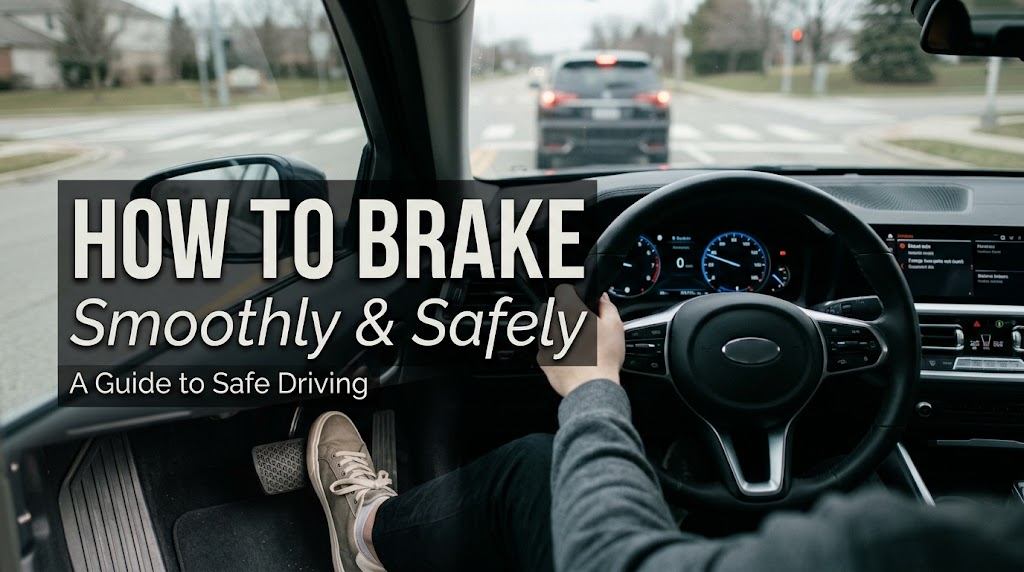
Braking is one of the most important skills every driver needs to master. It may seem simple press the brake pedal and slow down—but effective braking involves much more than stopping the car. Good braking helps you stay in control, gives other road users time to react, reduces unnecessary wear on your vehicle, and makes the entire driving experience more comfortable. Whether you are a new learner or an experienced driver looking to improve your technique, understanding how and when to brake can make a noticeable difference.
For learners, developing smooth braking habits early is especially valuable. Professional Driving Lessons Richmond can help learners understand how to judge speed, distance, traffic conditions, and stopping points while building confidence behind the wheel. With regular practice, braking becomes less of a conscious task and more of a natural part of safe driving.
Why Smooth Braking Matters
Smooth braking is not simply about making passengers comfortable. It is an important part of defensive driving and vehicle control.
When you brake gradually and appropriately, you have more time to assess what is happening around you. A sudden, unnecessary brake application can surprise drivers behind you and potentially increase the risk of a rear-end collision.
Smooth braking can also help you:
- Maintain better control of the vehicle.
- Keep passengers comfortable.
- Reduce unnecessary brake wear.
- Respond more effectively to changing traffic conditions.
- Avoid sudden weight transfer that can affect vehicle stability.
- Make stops at junctions, crossings, and traffic lights more predictable.
However, smooth braking does not mean braking slowly in every situation. If a hazard suddenly appears, firm or emergency braking may be necessary. The goal is to use the appropriate braking technique for the circumstances.
Understanding the Brake Pedal
Before focusing on technique, it helps to understand how the brake pedal responds to pressure.
Most modern cars use power-assisted braking, meaning you generally do not need to push the pedal extremely hard to slow the vehicle. A gentle, progressive application is usually enough for normal stops.
A common mistake among new drivers is either pressing the pedal too abruptly or being overly cautious and applying too little pressure. Both can create problems.
If you press too hard during an ordinary stop, the vehicle may slow more quickly than expected, causing passengers to lurch forward. If you apply too little pressure, you may continue travelling toward the stopping point and then need to brake harder at the last moment.
The solution is to develop a feel for the pedal. Practice in a safe environment and notice how much pressure is needed to produce different levels of deceleration.
How to Brake Smoothly Step by Step
1. Look Ahead
Good braking starts before your foot touches the pedal.
Instead of focusing only on the vehicle directly ahead, look well down the road. Watch for traffic lights, pedestrian crossings, junctions, parked vehicles, queues, speed changes, and other potential hazards.
Early observation gives you more options. If you notice a red light far ahead, for example, you can gradually reduce your speed rather than continuing at the same speed and braking sharply near the line.
This principle is sometimes called anticipation. The better you anticipate what is happening, the less often you will need sudden braking.
2. Release the Accelerator Early
When you identify a reason to slow down, begin by easing off the accelerator.
The vehicle will naturally lose some speed, particularly if you are travelling uphill or driving a vehicle with noticeable engine braking.
This does not mean you should rely on engine braking alone. Instead, lifting off the accelerator gives you an opportunity to reduce speed smoothly before applying the brakes.
It can also help you avoid unnecessary acceleration followed immediately by heavy braking.
3. Apply the Brake Progressively
Once you need to slow down further, place your foot smoothly on the brake pedal.
Start with light pressure and gradually increase it as necessary. As the car approaches the desired speed or stopping point, ease the pressure slightly.
Think of the movement as a controlled progression rather than an on-off action.
For example, if you are approaching a stop sign, you might initially apply moderate pressure, then reduce the pressure as your speed falls. The final part of the stop should ideally be gentle rather than producing a noticeable jerk.
4. Ease Off Before Coming to a Complete Stop
One of the easiest ways to improve braking smoothness is to pay attention to the final moment before stopping.
Many drivers maintain the same brake pressure right until the vehicle stops. This can create the familiar "nose dive" followed by a small jerk.
Instead, as the car reaches walking pace, gradually reduce brake pressure. Continue controlling the vehicle until it comes to a complete stop.
This technique takes practice because you need to judge how quickly the vehicle is slowing. Once you develop the feel, your stops will become much smoother.
How to Brake in Different Situations
Not every braking situation is the same. Your technique should change depending on the road, traffic, weather, and urgency.
Braking at Traffic Lights
If you can see that a traffic light is red, avoid waiting until the last possible moment to slow down.
Check your surroundings, lift off the accelerator early, and progressively reduce your speed. If the light changes before you reach it, you may be able to continue without stopping.
Always remain prepared to stop, however. Do not assume a light will change in your favour.
Braking at Junctions
Approaching a junction requires careful speed control.
Reduce your speed early enough that you can observe traffic and make a safe decision. Avoid approaching the junction too quickly and then braking heavily at the last second.
Your speed should allow you to stop if necessary while giving you enough control to proceed safely when the road is clear.
Braking on Wet Roads
Wet roads can reduce tyre grip and increase stopping distances.
When driving in rain, increase your following distance and allow yourself more time to slow down. Brake progressively rather than making unnecessary sudden movements.
If visibility is poor, reduce your speed further and use your lights appropriately.
Remember that smooth braking cannot eliminate the risks created by reduced traction. Your overall speed and following distance need to reflect the conditions.
Braking Downhill
Gravity causes your vehicle to accelerate more readily when travelling downhill.
Avoid relying entirely on the brake pedal to control your speed over a long descent. Where appropriate for your vehicle and road conditions, selecting a suitable lower gear can help provide engine braking.
Even so, continue monitoring your speed and use the brakes when required. Never select a gear that would cause the engine to exceed safe operating limits.
Emergency Braking
Emergency braking is different from normal smooth braking.
If a pedestrian, cyclist, vehicle, animal, or another unexpected hazard suddenly enters your path, you may need to brake firmly and quickly.
Modern vehicles may have anti-lock braking systems (ABS), which help drivers maintain steering control during heavy braking. If your vehicle has ABS and you need to make an emergency stop, apply firm, continuous pressure to the brake pedal and steer as necessary to avoid the hazard. Do not repeatedly pump an ABS-equipped brake pedal.
Emergency braking should be practised only in a safe, controlled environment under appropriate instruction—not by deliberately creating dangerous situations on public roads.
Common Braking Mistakes to Avoid
Braking Too Late
Waiting until the last moment is one of the most common causes of harsh braking. Looking further ahead gives you more time to react.
Braking Too Hard for Normal Stops
Heavy braking when it is unnecessary can make the ride uncomfortable and may increase brake and tyre wear.
Keeping Constant Pressure Until the Stop
This can cause the vehicle to jerk when it finally stops. Learning to ease off the pedal near the end can make a significant difference.
Following Too Closely
Even excellent braking technique cannot compensate for insufficient following distance. Leave enough space to react if the vehicle ahead slows suddenly.
Focusing Only on the Car Ahead
Traffic conditions can change several vehicles ahead. Looking further down the road helps you anticipate problems instead of reacting to them at the last second.
Ignoring Road Conditions
Rain, ice, loose gravel, mud, steep gradients, and heavy traffic can all affect how quickly a vehicle can stop. Adjust your speed and following distance accordingly.
How to Practise Smooth Braking
The best way to improve is through controlled, repeated practice.
Choose a quiet, safe road or suitable training area and practise stopping from different speeds. Focus on how much pressure you apply, how quickly the vehicle slows, and how gently you can complete the final part of the stop.
You can also practise identifying stopping points before you reach them. For example, select a safe point ahead and try to reduce speed gradually so that you arrive there at the intended speed.
If you are learning to drive, ask your instructor to give you feedback specifically on your braking. An instructor can identify habits you may not notice yourself, such as braking too late, releasing the pedal too quickly, or approaching hazards with excessive speed.
A Simple Braking Checklist
Before and during every drive, keep these principles in mind:
- Look well ahead for potential reasons to slow down.
- Lift off the accelerator early when appropriate.
- Apply the brakes progressively during normal stops.
- Adjust braking to road and weather conditions.
- Maintain a safe following distance.
- Ease brake pressure near a normal stop to avoid a final jerk.
- Brake firmly when an emergency requires it.
- Keep your attention on the whole traffic environment, not just the vehicle immediately ahead.
Final Thoughts
Smooth braking is a combination of observation, anticipation, timing, and pedal control. The aim is not to make every stop extremely slow or gentle; it is to brake appropriately for the situation while keeping your vehicle stable and predictable. By looking ahead, maintaining a safe distance, adjusting your speed, and learning to control brake pressure, you can become a calmer and more confident driver.
Like any driving skill, smooth braking improves with practice. Take the time to develop good habits rather than rushing the process, and remember that safe braking begins with good observation long before you reach for the pedal. With patient instruction and consistent practice from a reputable provider such as Benche Driving School, learners can build the practical skills and confidence needed to handle everyday braking situations safely and responsibly.

 English
 Arabic
 French
 Spanish
 Portuguese
 Deutsch
 Turkish
 Dutch
Dutch
 Italiano
 Russian
 Romaian
 Greek
Greek