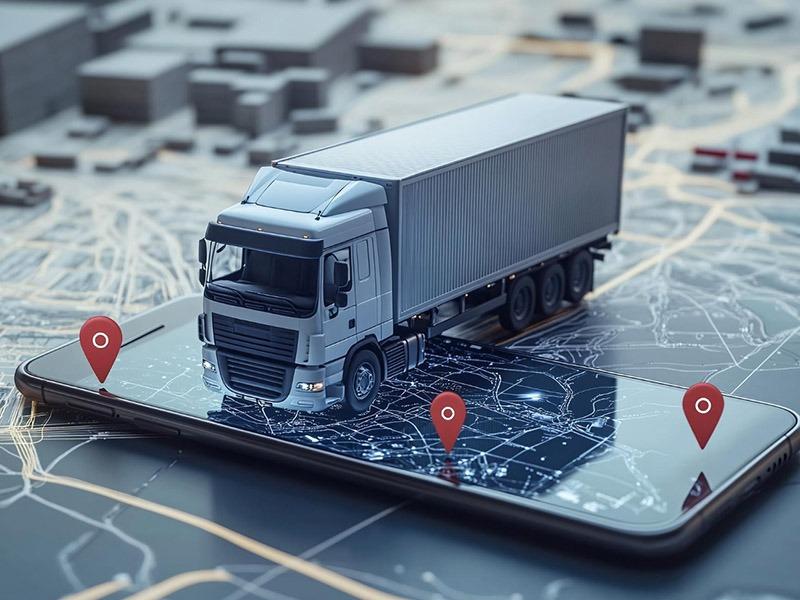
For many UAE businesses, the vehicle is not the final product. It is part of the service.
Air-conditioning technicians, electricians, maintenance teams, security companies, cleaning services, equipment installers, telecom technicians, and other field-service businesses depend on vehicles to move employees and equipment between customer locations every day.
When these vehicles are not managed properly, the problem can go beyond fuel costs. Technicians may arrive late, jobs can take longer to complete, customers may have to wait, and managers can spend much of their day trying to find out where teams are and what has happened.
This is where fleet technology can become more than a tracking tool.
A connected fleet platform can help field-service businesses understand where their vehicles are, how efficiently teams are moving, and where daily operations could be improved.
Why Is Vehicle Management Important for Field-Service Companies?
A field-service business usually has a different fleet challenge from a traditional transport company.
The vehicle may not follow one fixed route throughout the day. Instead, a technician might start from a company office, visit several customer locations, collect equipment from a warehouse, and then respond to an urgent service request.
That makes scheduling more complicated.
A manager may need to answer questions such as:
- Which technician is closest to a new customer request?
- Has the previous job been completed?
- How long has a vehicle been at a particular location?
- Which team can respond fastest?
- Are technicians spending too much time traveling?
- Are vehicles being used efficiently?
Without reliable information, many of these decisions depend on phone calls and manual updates.
Can GPS Tracking Give Managers Better Visibility?
A modern GPS Tracking Software platform can provide a live view of vehicle locations and movement.
For a field-service business in Dubai, this can make daily coordination easier.
Imagine a customer in Jumeirah reports an urgent equipment problem while another technician is already working nearby. Instead of calling several employees to find out who is available, the operations team can review vehicle locations and identify the most suitable team.
The same approach can work across Abu Dhabi, Sharjah, Ajman, or other service areas.
The benefit is not simply knowing where vehicles are.
It is having enough visibility to make better operational decisions.
How Can a Fleet Management System Improve Technician Scheduling?
Field-service companies often lose valuable time when technicians are assigned inefficiently.
A technician may be sent across the city for a job even though another team was already working much closer to the customer's location.
A Fleet Management System can help managers understand vehicle movement and organize field operations more effectively.
For example, a company with teams operating from multiple branches could monitor the location of vehicles and use that information when assigning new service requests.
This does not mean every job should automatically be given to the closest vehicle.
Skills, equipment, customer priority, working hours, and job requirements still matter.
However, location visibility gives managers another important piece of information when making the decision.
Can Better Routing Reduce Wasted Travel Time?
Travel is part of almost every field-service operation.
But not all travel contributes equally to business productivity.
A technician driving across the UAE to reach a customer may be spending valuable working hours on the road. If several appointments can be arranged more logically, the company may be able to complete more work without immediately adding more vehicles or staff.
Better route planning can help teams organize customer visits around practical travel patterns.
For businesses working across Dubai, Sharjah, and Ajman, this can be particularly useful when technicians have several appointments scheduled on the same day.
The objective is not simply to reduce kilometers.
It is to make the working day more manageable for both the technician and the operations team.
Can Fleet Management Software Help Reduce Administrative Work?
Field-service businesses often have a surprising amount of administrative work surrounding their vehicles.
Managers may need to collect driver updates, review trip information, check vehicle usage, monitor maintenance schedules, and prepare reports.
When these processes are handled through separate spreadsheets and messages, information can become difficult to maintain.
Fleet Management Software can bring several operational activities into a more centralized environment.
This gives managers a clearer way to review vehicle activity without constantly asking drivers for updates.
It also creates a more consistent record of fleet operations.
For a growing service company, reducing repetitive administrative work can be just as useful as improving vehicle movement.
What Happens When a Customer Says the Technician Was Late?
Customer complaints are sometimes difficult to investigate when there is no reliable journey record.
A customer may say the technician arrived much later than expected. The technician may remember encountering traffic or another delay. The manager is then left trying to determine what actually happened.
Vehicle location history can provide useful context.
A Vehicle tracking software platform can help businesses review the journey and understand when the vehicle started moving, where it stopped, and when it reached the customer location.
This does not automatically determine who was responsible for a delay.
Instead, it gives the business better information for investigating the situation.
That can lead to more constructive conversations with both customers and employees.
Can Vehicle Tracking Improve Emergency Service Response?
Some field-service businesses deal with urgent requests.
An air-conditioning company may receive an emergency call during extreme weather. A security company may need to send a technician to a critical site. An equipment maintenance provider may have to respond quickly when a customer's machinery stops working.
In these situations, time matters.
A GPS Tracker for Vehicle can help managers identify where available vehicles are located.
If the team already knows which technician has the right equipment and where that vehicle is, the dispatch decision can be made with greater confidence.
This can help turn fleet visibility into a practical customer-service advantage.
Can a GPS Tracker for Car Help Small Service Businesses?
Not every field-service company operates a large fleet.
A small electrical contractor may have only a few vans. A plumbing company may operate several service vehicles. A cleaning business may have teams traveling between residential and commercial locations.
For these businesses, a gps tracker for car can provide useful visibility without requiring a large fleet operation.
Managers can use vehicle information to understand daily movement and make sure company vehicles are being used for their intended business activities.
As the company grows, the same visibility can become the foundation for more structured fleet management.
How Can a Car Tracker Help Protect Service Vehicles?
Field-service vehicles often carry tools, spare parts, machinery, and other valuable equipment.
The vehicle itself may also represent an important company asset.
A Car Tracker can help businesses maintain visibility over vehicle movement.
If a vehicle moves outside expected operating hours or leaves a designated area unexpectedly, management can investigate the situation.
Geofencing can also be useful for creating virtual boundaries around offices, warehouses, project locations, or other important areas.
This gives businesses another layer of awareness around their mobile assets.
Can Better Fleet Visibility Improve Technician Productivity?
Productivity should not be measured simply by how many kilometers a technician drives.
For field-service companies, the more important questions are often:
How many jobs were completed?
How much time was spent traveling?
How long did technicians spend at customer sites?
Were appointments completed within the expected schedule?
Were some areas requiring repeated trips?
Fleet data can help managers identify patterns behind these questions.
For example, if technicians consistently spend large amounts of time traveling between two distant service areas, management may consider changing territory assignments or scheduling practices.
Small operational adjustments can sometimes have a meaningful effect on the working day.
What Happens When a Field-Service Business Expands?
Growth can make fleet management considerably more complicated.
A company operating five vehicles from one office may manage everything through direct communication. The same approach becomes harder when the business has several branches and dozens of technicians.
A connected platform provides a central operational view.
Managers can monitor vehicles across different areas, compare activity, review historical journeys, and maintain a clearer understanding of how the fleet is being used.
This can be especially useful for UAE companies expanding between Dubai, Abu Dhabi, Sharjah, and the Northern Emirates.
The technology does not remove the need for experienced managers.
It gives them better information to work with as the operation becomes larger.
Can Fleet Technology Also Create a New Business Opportunity?
There is another side to connected fleet technology.
Companies that already work with businesses in transportation, security, logistics, IT, or telecommunications may want to offer GPS and fleet services as part of their own portfolio.
With White Label GPS Tracking Software, businesses can build a branded tracking service around an established platform.
This allows the company to focus on its own market, customers, branding, and service model rather than developing an entire fleet platform from the ground up.
For technology entrepreneurs, this can create an opportunity to build recurring software services around a growing business need.
Why Is Fleet Technology Becoming More Than Just GPS Tracking?
The UAE fleet technology market is increasingly moving toward connected platforms that combine location data with driver behavior, vehicle information, sensors, analytics, and operational intelligence. Recent industry coverage reflects this shift from basic tracking toward broader fleet decision-making.
For field-service companies, that evolution makes sense.
Knowing where a vehicle is useful.
Knowing which technician is available is more useful.
Understanding how vehicles are being used, where time is being lost, and how service operations can be improved is even more valuable.
That is the difference between simply tracking vehicles and using fleet technology as part of business management.
How Can Flotilla IoT Support Field-Service Businesses?
Flotilla IoT provides a scalable fleet management platform designed to help businesses gain greater visibility into their vehicles and operations.
For field-service companies, this can support real-time vehicle visibility, route awareness, driver monitoring, alerts, reporting, and broader fleet management requirements.
For technology businesses, Flotilla IoT also provides white-label capabilities that can help create a branded GPS SaaS offering.
Whether you manage a small team of service vans or a growing multi-location operation, the right technology can make vehicle management easier to understand and easier to control.
Want to see how Flotilla IoT can fit into your field-service operation? Book a personalized demo and explore how connected fleet technology can help your business work smarter.

 English
 Arabic
 French
 Spanish
 Portuguese
 Deutsch
 Dutch
Dutch
 Italiano
 Russian
 Romaian
 Portuguese (Brazil)
 Greek
Greek