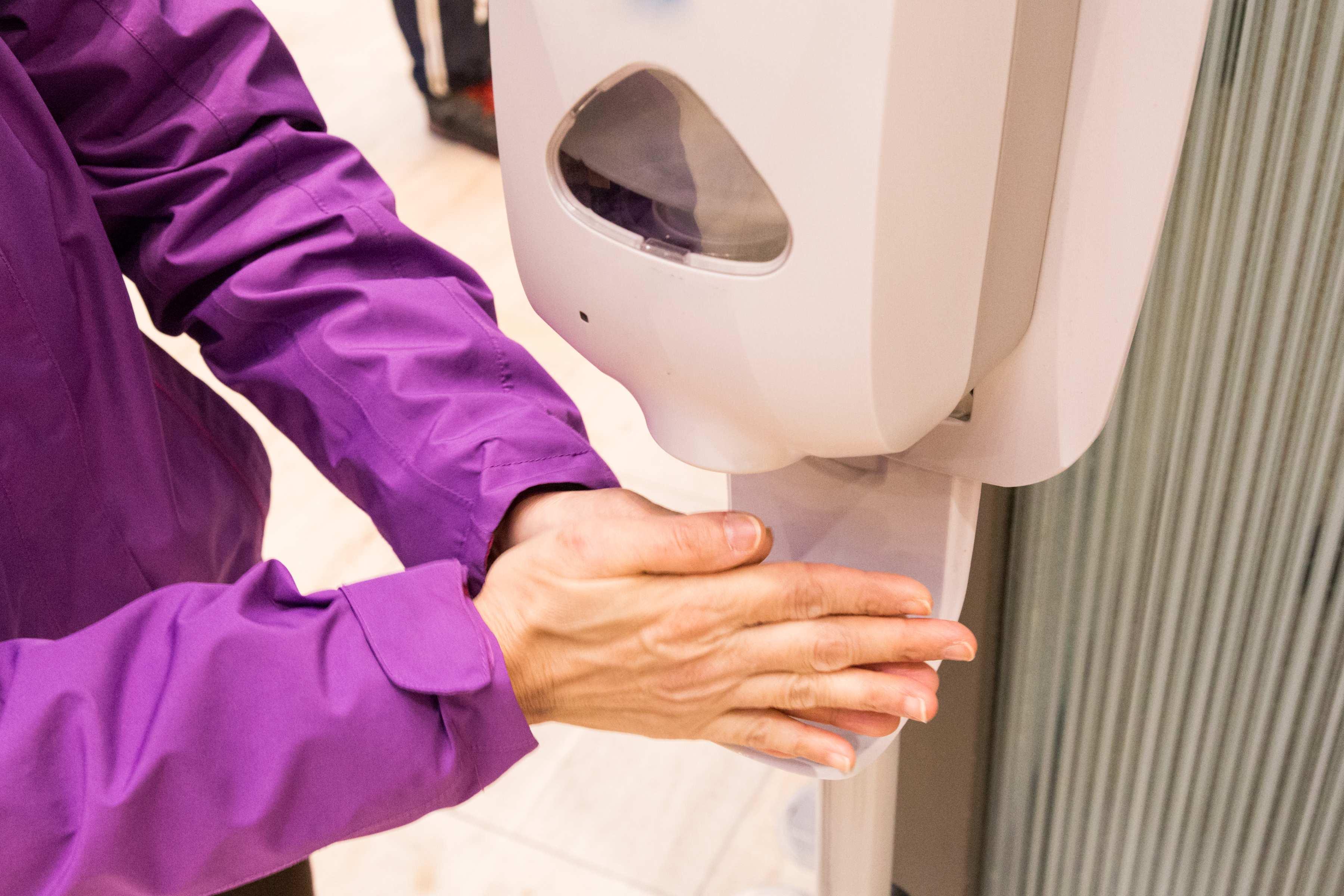
Choosing a commercial hand dryer involves more than comparing drying speed, noise level, design, and price. One of the most important technical specifications to check is voltage.
Installing a hand dryer with the wrong voltage can lead to poor performance, electrical problems, or an installation that simply isn't compatible with the building's electrical system.
Commercial facilities commonly encounter 120V, 208V, 240V, and 277V electrical configurations. Some businesses may also choose universal voltage hand dryers, which are designed to work across multiple voltage ranges.
In this guide, we'll explain the differences between these voltage options and how to choose the right one for your facility.
What Does Voltage Mean for a Hand Dryer?
Voltage is the electrical potential supplied to a device. In simple terms, it determines how much electrical pressure is available to operate the hand dryer's motor and heating components.
A commercial hand dryer is designed to operate within a specific voltage range. The voltage listed on the product's specification label should match the electrical supply available at the installation location.
For example:
- 120V models are commonly used in standard electrical installations.
- 208V models are often found in commercial buildings with three-phase electrical systems.
- 240V models are frequently used for higher-power commercial applications.
- 277V models are commonly associated with commercial and institutional electrical systems.
- Universal voltage hand dryers can support multiple voltage configurations, depending on the model.
Always verify the manufacturer's specifications and have electrical work performed by a qualified professional.
120V Hand Dryers
120V hand dryers are a common choice for facilities with standard 120-volt electrical circuits.
They can be suitable for locations such as:
- Small offices
- Restaurants
- Retail stores
- Schools
- Clinics
- Small commercial restrooms
- Public facilities with compatible electrical systems
One advantage of 120V models is that the required electrical infrastructure may already be available in many buildings.
However, you should never assume that a 120V model is appropriate simply because the building has standard outlets. Commercial hand dryers are typically hardwired or installed according to their specific electrical requirements.
Advantages of 120V Models
- Compatible with many standard electrical systems
- Suitable for numerous commercial applications
- Can simplify installation when the appropriate circuit already exists
- Available in a wide range of commercial hand dryer designs
208V Hand Dryers
208V hand dryers are commonly associated with commercial buildings that use three-phase electrical systems.
You may encounter 208V electrical service in:
- Office buildings
- Schools and universities
- Hotels
- Hospitals
- Large retail facilities
- Commercial complexes
A 208V hand dryer can be a practical option when the building's electrical system already provides the appropriate voltage.
The key point is that 208V is not interchangeable with 240V simply because the numbers are relatively close. The hand dryer must be rated for the electrical supply being used.
240V Hand Dryers
240V hand dryers are another common option for commercial and institutional applications.
Higher-voltage models can be useful for hand dryers that require substantial electrical power, particularly high-speed models designed to reduce drying time.
Potential installation environments include:
- Airports
- Shopping centers
- Hotels
- Large restaurants
- Schools
- Industrial facilities
- High-traffic public restrooms
The actual performance of a hand dryer depends on more than voltage. Motor design, heating technology, airflow, and overall engineering also affect drying speed and energy consumption.
Therefore, don't select a model solely because it has a higher voltage rating.
277V Hand Dryers
277V hand dryers are commonly found in larger commercial and institutional environments.
277V electrical systems are frequently used in commercial buildings because they can be part of electrical distribution systems serving lighting and other equipment.
Potential applications include:
- Large office buildings
- Universities
- Hospitals
- Airports
- Government facilities
- Large commercial developments
- Industrial buildings
If your facility has 277V available at the intended installation location, a hand dryer specifically rated for 277V may be an appropriate choice.
As with all electrical installations, the exact circuit configuration should be verified before purchasing the equipment.
120V vs. 208V vs. 240V vs. 277V: Quick Comparison
| Voltage | Common Environment | Best Consideration |
|---|---|---|
| 120V | Offices, restaurants, retail, smaller facilities | Standard compatible electrical circuits |
| 208V | Commercial buildings, schools, hotels | Buildings using compatible three-phase systems |
| 240V | Commercial and high-power applications | Facilities with compatible 240V circuits |
| 277V | Large commercial and institutional buildings | Facilities with compatible 277V distribution |
| Universal Voltage | Various commercial environments | Flexibility across supported voltage ranges |
The exact compatibility varies by manufacturer and model, so always check the product's technical specifications.
What Are Universal Voltage Hand Dryers?
A universal voltage hand dryer is designed to operate with more than one electrical voltage, within the range specified by the manufacturer.
This can be particularly useful for businesses, contractors, architects, and facility managers who need flexibility.
For example, instead of purchasing separate hand dryer models for different electrical environments, a universal model may support several voltage configurations.
However, "universal voltage" does not mean the unit can operate on literally every voltage.
A manufacturer might specify a supported range such as multiple commercial voltages. The exact range depends on the model.
Benefits of Universal Voltage Hand Dryers
1. Greater Installation Flexibility
Universal voltage models can make product selection easier when the electrical requirements vary between locations.
This can be especially valuable for companies managing multiple facilities.
2. Easier Standardization
Businesses with locations that use different electrical systems may be able to standardize on one hand dryer model.
This can simplify:
- Purchasing
- Inventory management
- Maintenance
- Replacement
- Staff training
3. Useful for Multi-Location Projects
Contractors and facility managers working on multiple commercial projects may benefit from having a hand dryer that supports several voltage configurations.
4. Simplified Product Selection
Instead of immediately narrowing your search based on one voltage, a universal model may provide more flexibility.
Nevertheless, the electrical supply should still be verified before installation.
Does Higher Voltage Mean Faster Drying?
Not necessarily.
It's a common misconception that a hand dryer with a higher voltage rating will automatically dry hands faster.
Drying performance depends on several factors, including:
- Motor power
- Airflow volume
- Air velocity
- Heating technology
- Nozzle design
- Sensor technology
- Overall product design
A properly engineered 120V hand dryer can perform very differently from another 120V model.
Likewise, a 240V or 277V hand dryer isn't automatically the fastest option.
When comparing products, look at the complete performance specifications, rather than voltage alone.
How to Choose the Correct Hand Dryer Voltage
Before purchasing a commercial hand dryer, follow these steps.
Step 1: Identify the Available Electrical Supply
Ask your electrician or facilities team what voltage is available at the intended installation point.
Don't rely solely on the building's general electrical service.
Step 2: Check the Hand Dryer's Specification
Review the manufacturer's product specifications for:
- Voltage
- Frequency
- Amperage
- Wattage
- Circuit requirements
- Installation requirements
Step 3: Consider the Electrical Circuit
The voltage isn't the only consideration. The circuit must also be appropriately sized for the equipment.
A qualified electrician can determine whether the existing circuit is suitable.
Step 4: Consider Future Replacement
If you operate multiple facilities, a universal voltage hand dryer may make future replacement and inventory management easier.
Step 5: Compare Performance
Once electrical compatibility is confirmed, compare:
- Drying time
- Airflow
- Noise level
- Energy consumption
- Sensor response
- Filter options
- Durability
- Warranty
- Maintenance requirements
Common Voltage Selection Mistakes
Mistake 1: Buying Based Only on Price
The cheapest hand dryer isn't necessarily the most economical option.
Consider installation, energy use, maintenance, durability, and replacement costs.
Mistake 2: Assuming 208V and 240V Are Interchangeable
They are different electrical specifications. Always purchase equipment rated for the actual supply.
Mistake 3: Ignoring Frequency
Voltage isn't the only electrical specification. Check whether the unit is compatible with the electrical frequency used at your location.
Mistake 4: Assuming "Universal" Means Every Voltage
Universal voltage models still have defined operating limits. Read the manufacturer's specifications carefully.
Mistake 5: Choosing Based Only on Voltage
Voltage alone doesn't determine drying performance. Look at the complete product specifications.
Why Voltage Matters for Commercial Hand Dryer Installation
Selecting the correct voltage helps ensure that the hand dryer is compatible with the building's electrical system and can operate as intended.
Using equipment outside its specified electrical rating can create safety and performance concerns. That's why commercial hand dryer installation should follow the manufacturer's instructions and applicable electrical requirements.
For new construction or major restroom renovations, it's particularly useful to determine electrical requirements before selecting the final hand dryer model.
Are Universal Voltage Hand Dryers Worth Considering?
For businesses managing multiple locations, universal voltage hand dryers can provide a useful combination of flexibility and standardization.
They can reduce the need to stock different models for different electrical environments, provided the selected model supports the voltage configurations required by your facilities.
For a single location, however, a standard voltage-specific model may be perfectly suitable if it matches the building's electrical supply.
The best choice depends on the facility, electrical system, traffic level, performance requirements, and long-term maintenance strategy.
Final Thoughts
Understanding hand dryer voltage is an important part of choosing the right commercial restroom equipment.
120V, 208V, 240V, and 277V hand dryers are designed for different electrical environments, while universal voltage hand dryers can offer additional flexibility when they support the required electrical configurations.
Before purchasing, always confirm:
- The voltage available at the installation point
- The hand dryer's rated voltage
- Frequency requirements
- Amperage and wattage
- Circuit requirements
- Installation instructions
- Local electrical requirements
Don't choose a hand dryer based on voltage alone. The right combination of electrical compatibility, drying performance, energy efficiency, noise level, durability, and maintenance requirements will provide a better long-term solution for your commercial restroom.

 English
 Arabic
 French
 Spanish
 Portuguese
 Deutsch
 Turkish
 Dutch
Dutch
 Italiano
 Russian
 Romaian
 Greek
Greek