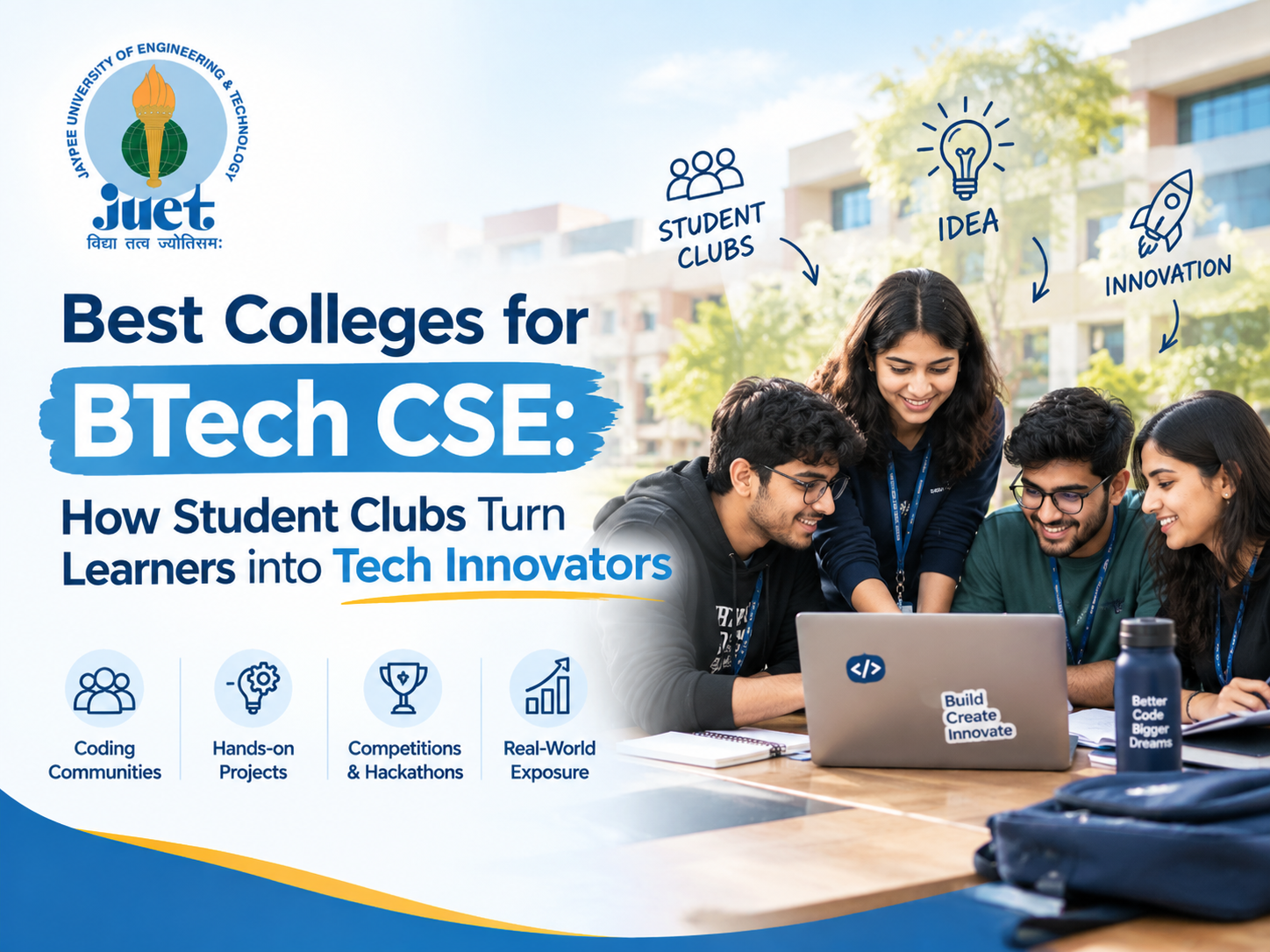
When students compare the best colleges for btech cse, they usually start with brochures and rankings. Fair enough. But the students who get the most out of four years of computer science engineering often say the same thing later: the real learning happened outside the lecture hall, in clubs, late-night project sessions and hackathons.
So this guide looks at what to check in a college and why student communities matter more than most people realise.
What Should Students Look for in the Best Colleges for BTech CSE?
Start with the basics: a curriculum that's kept up to date, faculty who know their subjects, good computer labs and stable technical infrastructure. Then look at what sits around the classroom. Are there internships and industry talks? Do students take part in coding competitions and hackathons? Are the clubs active or only listed on the website? And what does career support look like?
Rankings and popularity can help you shortlist, but they say little about daily learning. Look at the overall environment. Talk to a few current students if you can. They'll tell you things no prospectus will.
Why Student Clubs Matter in Computer Science Education
A club gives you what a timetable can't: people to learn with. Seniors explain things differently from professors, and you pick up coding habits by working alongside others. You practise teamwork, take on leadership roles, compete, network, and try out ideas without worrying about marks.
There's also the freedom to experiment. Want to test a new framework or build a tool nobody asked for? A club is where that happens, and academic concepts start to make sense once you apply them to something real.
From Classroom Concepts to Real-World Projects
Theory becomes useful when you build with it. Students do this through web and app projects, AI and machine learning experiments, open-source contributions, technical workshops, hackathons and even early startup ideas.
Each project adds to your portfolio. That matters more than it sounds. A short list of things you've built, with code and a demo, usually says more about you than a list of subjects you studied.
How Innovation Clubs Encourage Entrepreneurship
Innovation communities help students move from noticing a problem to building something that addresses it. The path usually runs through idea generation, design thinking, prototyping, forming a team, finding mentors, pitching, and thinking about how a product might work in practice.
The Innovation Startup and Development Club at JUET is one example, and the university's blog describes how it supports innovation, startups and student entrepreneurship. Whichever college you're considering, ask whether a similar community exists and how active it really is. Even if you never start a company, learning to pitch an idea and take feedback is worth it.
Skills Students Can Build Through Technical and Innovation Clubs
Programming and critical thinking come first, but the list is longer than that. Clubs build leadership, collaboration, presentation, project management, time management and creativity. Some students pick up an entrepreneurial mindset too.
These sit comfortably next to formal btech in CSE coursework. Employers and graduate schools look for technical ability, but they also want to know you can work with other people and finish what you start.
Clubs, Hackathons and Career Preparation
Hackathons and club projects let you work on real problems and show what you can do. Used well, they strengthen internship applications, placement preparation and higher-study profiles.
Keep records as you go: a GitHub repository, a short write-up of each project, a demo link. No club or event can promise a particular placement outcome, so don't choose a college on that basis. What they give you is evidence of your abilities, and that helps in any interview.
How to Choose the Right BTech CSE College
Go through this list before you decide:
- Curriculum: is it current and flexible?
- Faculty: are they qualified and approachable?
- Infrastructure: are labs and resources well maintained?
- Technical clubs: are they active and open to first-years?
- Innovation ecosystem: is there support for prototypes and startups?
- Hackathons: does the college host them or send teams?
- Industry exposure: are there internships, workshops and guest sessions?
- Research: can undergraduates take part?
- Career support: is the training structured and transparent?
- Student development: does the campus support growth beyond academics?
You won't find a college that scores full marks on everything. Decide which points matter most to you and weigh them accordingly.
Building a Future With BTech in CSE
A strong grounding in computer science leads to many paths: software development, artificial intelligence, machine learning, data science, cybersecurity, cloud computing, web development, research and technology entrepreneurship.
If you're still weighing branches, this comparison of btech in CSE against other engineering streams can help you think about long-term career fit. Whatever you choose, pair the degree with projects, club activity and steady learning, and you'll be better prepared for whichever direction you take.
Conclusion
The best colleges for btech cse don't just teach well. They give students space to build, compete and collaborate. Before you apply, look beyond the classroom: check the clubs, the hackathons, the project culture and how students learn from one another. That's often where the biggest growth happens.
FAQs
1. How do I find the best colleges for BTech CSE?
Compare curriculum, faculty, labs, practical exposure, clubs, hackathon culture and career support. Verify each on official sources and by talking to students.
2. Why are technical clubs important?
They offer peer learning, project experience and teamwork, and let you apply concepts outside the classroom.
3. What are the benefits of hackathons?
They build problem-solving, quick prototyping, collaboration and presentation skills, and leave you with projects to show.

 English
 Arabic
 French
 Spanish
 Portuguese
 Deutsch
 Dutch
Dutch
 Italiano
 Russian
 Romaian
 Portuguese (Brazil)
 Greek
Greek