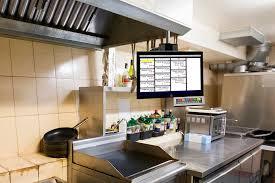
A busy restaurant depends on coordination between the front-of-house team, kitchen staff, servers, and management. When orders move quickly from customers to the kitchen, even a small communication problem can result in delays, incorrect meals, or unhappy guests. A Kitchen Display System can help restaurants organize this process by replacing traditional paper tickets with a digital method of managing kitchen orders.
A Kitchen Display System, often called a KDS, displays incoming orders on screens located in food preparation areas. Kitchen staff can see what needs to be prepared, identify order priorities, and update the progress of meals as they move through different stages.
For restaurants handling a high volume of orders, this technology can create a more organized workflow while reducing dependence on handwritten or printed tickets.
How a Kitchen Display System Works
A Kitchen Display System connects the restaurant's ordering process with the kitchen. When an order is placed through a point-of-sale system or another integrated ordering channel, the relevant information can appear on the kitchen display.
Instead of waiting for a server to deliver a printed ticket, kitchen staff can receive the order digitally. Depending on the system, orders may be organized by time, preparation station, order type, or priority.
Kitchen employees can then work through the displayed orders and update their status. This gives the restaurant team better visibility into which meals are waiting, being prepared, or ready for service.
The exact features depend on the technology a restaurant chooses, but the central goal remains the same: make kitchen communication faster and easier to manage.
Why Restaurants Are Moving Away From Paper Tickets
Paper tickets have been used in restaurants for decades, but they can create challenges during busy service periods. Tickets can be misplaced, damaged, difficult to read, or accidentally overlooked.
When several orders arrive simultaneously, kitchen staff may also have difficulty determining which ticket should be prepared first.
A digital system provides a centralized view of active orders. Instead of searching through a collection of paper tickets, staff can review orders directly on a screen.
This can make the kitchen environment more organized and give employees a clearer understanding of the workload during peak hours.
Benefits of a Kitchen Display System for Restaurant Teams
A Kitchen Display System for Restaurant operations can provide several practical benefits. One of the most important is improved communication between the front and back of the house.
When an order is entered into the system, kitchen employees can receive the information without relying on verbal communication. This can reduce confusion and make order details easier to follow.
Digital displays can also provide better visibility into preparation times. Managers may be able to identify orders that have been waiting too long and take action before delays become larger problems.
Another benefit is organization. Orders can be sorted according to different criteria, helping kitchen employees focus on the most important tasks at a given moment.
Improving Order Accuracy
Order accuracy is critical in the restaurant industry. A customer who receives the wrong meal may have to wait longer while the kitchen prepares a replacement, affecting both the customer experience and kitchen efficiency.
A Kitchen Display System can present order details in a consistent digital format. Modifiers, special instructions, quantities, and other relevant information can be displayed clearly, depending on the system's capabilities.
This can help kitchen staff review the details before beginning preparation.
Digital communication can also reduce the risk of information being misunderstood when orders are communicated verbally between servers and kitchen employees.
Managing Busy Kitchen Workflows
Restaurant kitchens can become extremely busy during lunch, dinner, weekends, and special events. During these periods, having a clear system for prioritizing orders can make a significant difference.
A Kitchen Display System can help staff see the entire queue instead of focusing only on individual tickets.
Orders can potentially be grouped according to preparation areas. For example, one screen may be used for grill items while another handles salads, desserts, or beverages. This allows different kitchen stations to focus on the tasks assigned to them.
Such organization can be particularly useful for restaurants with large menus or multiple preparation stations.
Supporting Faster Service
Customers generally expect restaurants to provide their meals within a reasonable amount of time. Delays can negatively affect the dining experience, particularly when customers are in a hurry.
A Kitchen Display System for Restaurant environments can help teams monitor orders from the moment they enter the kitchen. Employees can quickly identify new orders and determine which meals require attention.
When kitchen staff have better visibility into their workload, they may be able to coordinate preparation more effectively.
Faster service is not simply about preparing food quickly. It also depends on communication, timing, coordination, and knowing what needs to happen next.
Connecting Front-of-House and Back-of-House Operations
A restaurant works best when its front-of-house and kitchen teams operate as one coordinated unit. Servers need to know when orders are being prepared and when meals are ready to be delivered.
A Kitchen Display System can improve visibility between these areas. Status updates can help staff understand where an order is in the preparation process.
This can reduce the need for servers to repeatedly ask kitchen employees about order progress.
Better communication can also help managers identify bottlenecks. If a particular station consistently has a large number of pending orders, management can investigate the issue and adjust staffing or workflow.
Managing Different Types of Restaurant Orders
Modern restaurants often handle more than traditional dine-in orders. Takeout, delivery, online ordering, catering, and pickup orders can all contribute to kitchen workload.
Managing these different order types manually can become challenging, especially during peak periods.
A Kitchen Display System can provide a centralized way to organize incoming orders, depending on the integrations available. Restaurants can use digital information to distinguish between order types and prioritize preparation accordingly.
This can help kitchen employees understand not only what food needs to be prepared but also how and when the order needs to leave the kitchen.
Reducing Waste and Operational Errors
Food waste can become a significant expense for restaurants. Incorrect orders, duplicate preparations, and misunderstood instructions can contribute to unnecessary waste.
Better order visibility can help reduce some of these operational problems. When kitchen staff have access to accurate digital order information, they can prepare meals based on the actual requirements entered into the system.
Restaurants can also use operational data to identify recurring problems. If certain dishes frequently require corrections or take significantly longer to prepare, management can examine the underlying workflow.
Reducing avoidable mistakes can support both operational efficiency and cost control.
Helping Managers Monitor Restaurant Performance
A modern Kitchen Display System can provide more than order visibility. Depending on its features and integrations, it may provide useful information about kitchen performance.
Managers may be able to review preparation times, order volumes, peak periods, and workflow patterns.
This information can support better operational decisions. For example, if data shows that order volumes consistently increase during a particular period, management can prepare staffing and inventory accordingly.
Data can turn kitchen activity into measurable information that restaurants can use to improve their processes over time.
Choosing the Right Kitchen Display System
Restaurants should evaluate their specific needs before selecting a Kitchen Display System. A small café may require a simpler solution than a large restaurant with multiple kitchen stations and high order volumes.
Integration is an important consideration. The system should work effectively with the restaurant's existing ordering and point-of-sale environment.
Ease of use is equally important. Kitchen employees work in a fast-paced environment, so displays should be easy to understand and operate.
Restaurants should also consider reliability, scalability, support, and the ability to adapt the system as their operations grow.
The Role of Nova Flare Connect in Restaurant Technology
Restaurants looking to improve their digital operations can explore Nova Flare Connect as part of their technology strategy.
Modern restaurant technology should focus on solving practical operational challenges rather than adding unnecessary complexity. A well-planned digital system can help restaurants improve communication, organize orders, and create better visibility across their operations.
For businesses evaluating solutions for kitchen management, it is important to consider how the technology will fit into existing workflows and whether it can support future growth.
The right approach can help restaurant teams work more efficiently while creating a smoother experience for customers.
Preparing Restaurants for Future Growth
Restaurant technology continues to evolve as businesses look for better ways to manage increasing order volumes and customer expectations. Digital kitchen management is becoming an important part of this transformation.
A Kitchen Display System can provide a foundation for more connected restaurant operations. By digitizing kitchen communication and organizing order information, restaurants can create workflows that are easier to monitor and improve.
As restaurants expand into online ordering, delivery, multiple locations, and larger menus, having organized digital processes can become increasingly important.
Technology cannot replace effective management or skilled employees, but it can give restaurant teams better tools for performing their roles.
Conclusion
A Kitchen Display System can help restaurants improve order communication, kitchen organization, accuracy, and overall workflow. By replacing traditional paper tickets with digital order management, restaurants can create greater visibility into what needs to be prepared and when.
For businesses seeking a Kitchen Display System for Restaurant operations, the most important factors are usability, integration, reliability, and compatibility with the restaurant's specific workflow.
From busy independent restaurants to growing food-service businesses, digital kitchen management can provide valuable operational advantages. As technology becomes increasingly important in the restaurant industry, solutions such as those explored through Nova Flare Connect can help businesses consider more connected approaches to managing their daily operations.

 Arabic
 French
 Spanish
 Portuguese
 Deutsch
 Turkish
 Dutch
Dutch
 Italiano
 Russian
 Romaian
 Portuguese (Brazil)
 Greek
Greek