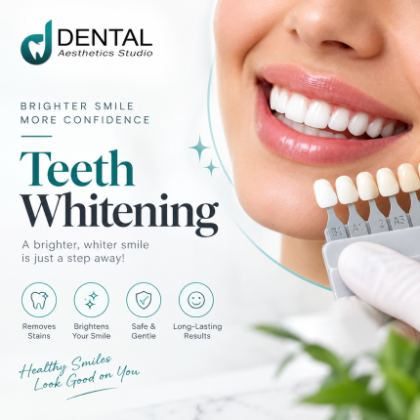
Professional teeth whitening is a cosmetic dental treatment designed to improve the color and appearance of natural teeth. Over time, teeth can become yellow or stained because of coffee, tea, tobacco, colorful foods, aging, and other lifestyle habits. Whitening helps reduce this discoloration and creates a brighter-looking smile.
Unlike many over-the-counter methods, professional treatment is carried out with dental guidance. Before beginning treatment, a dentist can examine your teeth and gums to determine whether whitening is suitable for you. Professional teeth whitening can then be customized according to your tooth color, sensitivity, and cosmetic goals.
How Does Professional Teeth Whitening Work?:
Professional whitening commonly uses peroxide-based whitening agents that work on the molecules responsible for tooth discoloration. These ingredients help break down stain compounds, making them less visible and allowing the natural teeth to appear lighter.
The dentist controls how the whitening product is applied and how long it remains on the teeth. Depending on the treatment system, more than one application may be used during an appointment. This controlled process allows the treatment to be adjusted according to individual needs.
What Causes Teeth to Become Yellow?:
There are many reasons why teeth lose their natural brightness. Coffee, tea, cola, tobacco, berries, sauces, and other highly pigmented foods can create surface stains. Plaque and tartar buildup may also make teeth appear dull or yellow.
Age is another common factor. As enamel naturally becomes thinner over time, the yellowish dentin underneath can become more visible. Some types of discoloration can also occur because of medications, dental trauma, or changes within the tooth itself.
What Happens During a Professional Whitening Appointment?:
A professional whitening visit generally begins with an examination of your teeth and gums. Your dentist may check for cavities, gum disease, cracks, enamel concerns, and other problems that could affect the treatment.
Once the teeth are considered suitable, the dentist prepares the mouth and protects the surrounding gum tissue. The whitening product is then applied carefully to the natural teeth. Depending on the whitening system, a specialized light may be used as part of the procedure.
How Quickly Can You See Results?:
One of the main attractions of professional whitening is that visible improvement may occur relatively quickly. Some patients notice a brighter smile after a single in-office appointment, while others may require a more gradual treatment plan.
The outcome depends on the original color of your teeth, the severity of staining, the type of discoloration, and the whitening method used. Your dentist can discuss realistic expectations before treatment so you know what kind of improvement may be possible.
Can Professional Whitening Remove Yellow and Brown Stains?:
Professional whitening can reduce many common surface stains caused by coffee, tea, tobacco, and strongly colored foods. Yellow discoloration often responds well when it is related to surface staining or natural age-related changes.
However, not all discoloration responds equally. Some deep internal stains may require alternative cosmetic treatments. A dental examination can help identify the cause of discoloration and determine whether whitening is likely to provide the desired result.
Is Professional Teeth Whitening Safe?:
When appropriate products are used correctly and treatment is professionally supervised, teeth whitening is generally considered safe for suitable patients. Some people may experience temporary tooth sensitivity or mild gum irritation after treatment.
A dental examination is especially useful for patients with sensitive teeth, cavities, gum problems, or enamel concerns. Existing dental conditions should be addressed before whitening when necessary. Patients looking for complete smile enhancement can also explore dental aesthetics for additional cosmetic treatment options.
Does Teeth Whitening Hurt?:
Most patients do not consider professional whitening a painful procedure. However, temporary sensitivity may occur during or after treatment. Cold drinks, hot foods, sweet foods, or acidic beverages can sometimes trigger sensitivity for a short period.
People who already have sensitive teeth may need a modified treatment plan. Your dentist can recommend suitable techniques or products to make the whitening experience more comfortable.
Can Whitening Improve Your Confidence?:
A brighter smile can have a positive effect on how you feel about your appearance. Stained or yellow teeth may make some people hesitant to smile or take photographs. Improving tooth color can create a cleaner and more refreshed appearance.
Because whitening focuses on tooth shade rather than changing the shape or alignment of the teeth, it can be a relatively simple cosmetic option for people who want a visible smile improvement.
Does Teeth Whitening Work on Crowns and Veneers?:
Professional whitening mainly affects natural tooth structure. Crowns, veneers, fillings, and other restorations generally do not respond to bleaching agents in the same way as natural teeth.
This is important to consider before treatment. If you have visible restorations, your dentist can explain how whitening may affect the overall balance of your smile and whether additional cosmetic treatment may be necessary.
How Long Do Whitening Results Last?:
Whitening results are not permanent because teeth continue to encounter staining foods, drinks, tobacco, and other discoloring substances. The length of time results remain visible varies from one person to another.
Good oral hygiene and healthy lifestyle choices can help prolong the brightness of your smile. Regular dental cleanings and appropriate touch-up treatments may also help maintain the results.
How Can You Maintain a Brighter Smile?:
Maintaining your whitening results starts with consistent oral hygiene. Brush your teeth twice a day with fluoride toothpaste and floss every day to help control plaque and surface stains.
It is also helpful to limit tobacco and frequently consumed staining beverages. Drinking water after meals, coffee, or tea can help rinse away some staining substances. Regular dental checkups allow your dentist to monitor your oral health and whitening results.
What Should You Avoid After Whitening?:
After professional whitening, your dentist may recommend temporarily limiting strongly colored foods and drinks. Coffee, tea, cola, red wine, curry, berries, and dark sauces can contribute to new staining.
Very hot or cold foods may also be uncomfortable if you experience temporary sensitivity. Following your dentist's aftercare instructions can help protect the treatment results and make the recovery period more comfortable.
How Often Can You Get Teeth Whitening?:
The ideal frequency of whitening depends on the treatment method, your oral health, lifestyle, sensitivity, and how quickly stains return. There is no single schedule that is suitable for everyone.
Repeated whitening without professional advice is not recommended. A dentist can determine when a touch-up treatment is appropriate and help you maintain a brighter smile without unnecessary treatment.
Why Choose Professional Teeth Whitening?:
Professional whitening offers the advantage of dental assessment, controlled treatment, and personalized guidance. Your dentist can identify oral health concerns before whitening and recommend the appropriate method for your needs.
Professional care can also help you understand realistic results and create a maintenance plan for the future. This makes whitening part of a broader approach to maintaining an attractive and healthy smile.
Final Thoughts on Professional Teeth Whitening:
Professional teeth whitening can brighten naturally stained teeth, reduce yellow and brown discoloration, and improve the overall appearance of your smile. The treatment is carefully planned according to your oral health, tooth shade, sensitivity, and cosmetic expectations.
Good oral hygiene, regular dental checkups, sensible food choices, and avoiding tobacco can help your results last longer. To learn more about teeth whitening treatment and professional dental care, consult a qualified dental professional for personalized advice:

 English
 French
 Spanish
 Portuguese
 Deutsch
 Turkish
 Dutch
Dutch
 Italiano
 Russian
 Romaian
 Portuguese (Brazil)
 Greek
Greek