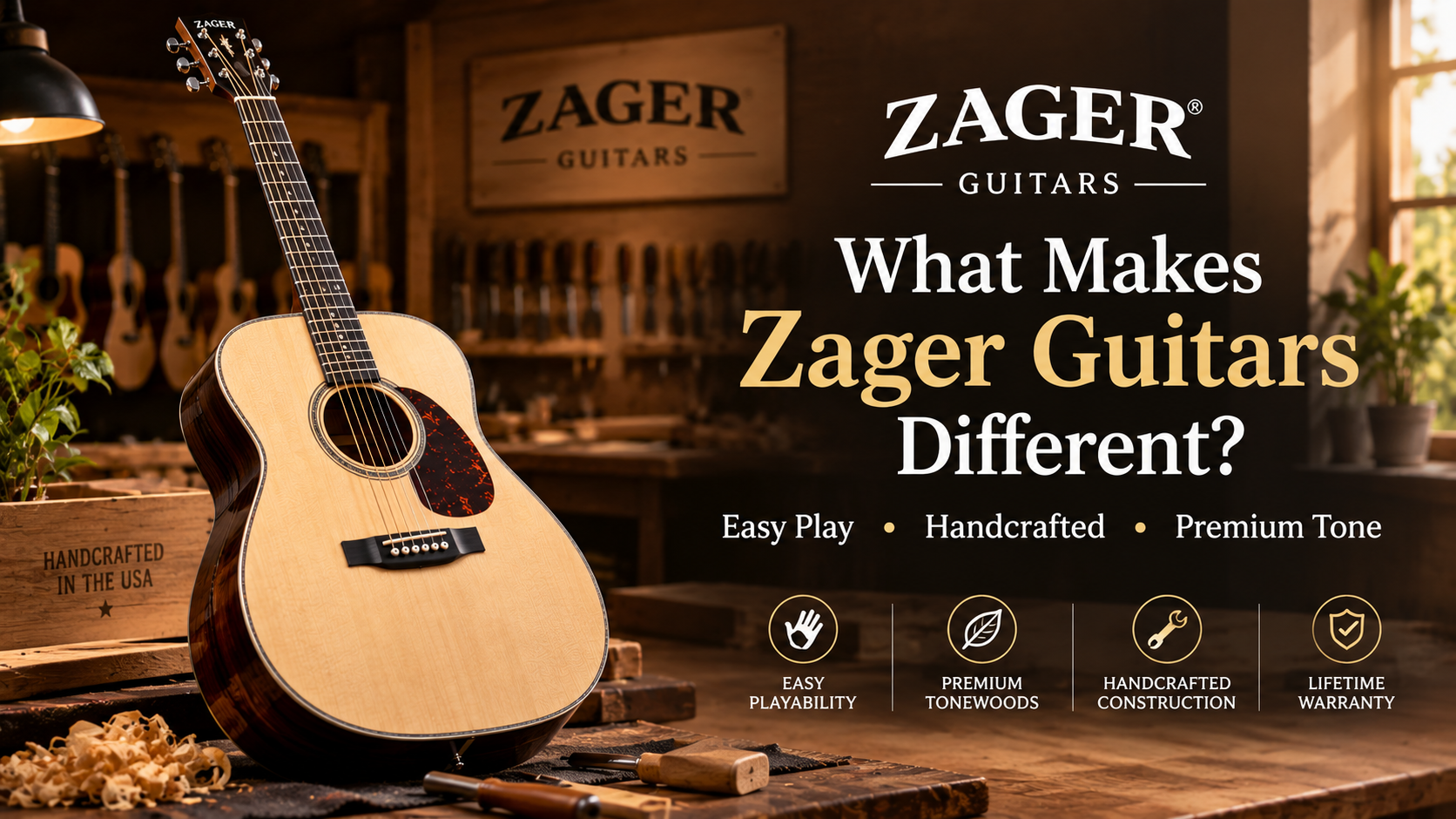
Choosing an acoustic guitar is a personal decision. A great guitar should sound inspiring, feel comfortable in your hands, and make you want to play more often. While there are countless acoustic guitar brands available today, some players are looking for something beyond a standard factory-built instrument.
Zager Guitar takes a different approach by combining handcrafted construction with its Easy Play philosophy. The company builds several acoustic and acoustic-electric guitar series, ranging from the accessible ZAD20 to the premium ZAD900. Its focus is on creating instruments that combine comfortable playability, quality materials, and a strong acoustic voice.
For beginners, hobbyists, songwriters, touring musicians, and experienced guitarists, understanding these differences can make choosing the right instrument much easier.
The Easy Play Philosophy
One of the most recognizable features of Zager guitars is the company's Easy Play design.
Playing guitar requires repeated movement of the fingers and hands. If an instrument feels difficult to fret or uncomfortable to hold, practicing can become frustrating. Zager focuses on elements such as neck shape, string spacing, string height, and fret design to create an easier playing experience.
The company says its Easy Play guitars are designed to help players play faster and longer with less finger pain and soreness.
This approach can be especially valuable for beginners who are still developing finger strength. It can also benefit experienced musicians who spend hours practicing, recording, or performing.
Handcrafted Construction Matters
Another important difference is the emphasis on handcrafted construction.
Mass-produced guitars can provide excellent value, but some musicians prefer an instrument where greater attention is given to individual construction details. Zager describes its guitars as handmade instruments produced in its workshop in Lincoln, Nebraska.
Handcrafted construction can be particularly appealing to players who view their guitar as a long-term musical investment rather than simply another piece of equipment.
Details such as the bracing, finish, fretwork, nut, saddle, binding, and tuning machines can all contribute to the overall playing experience.
Choosing the Right Zager Series
Zager offers several guitar series, allowing players to choose according to their experience, budget, tone preferences, and intended use.
ZAD20: An Accessible Starting Point
The ZAD20 Series is positioned as Zager's straightforward acoustic option. It uses solid spruce and mahogany and is designed to provide the company's Easy Play characteristics in a simpler package.
If you're buying your first serious acoustic guitar or want an everyday instrument for practice and songwriting, the ZAD20 Series can be a practical place to begin.
The goal isn't necessarily to buy the most expensive guitar. Instead, look for an instrument that fits your playing needs and encourages you to practice.
ZAD50: Versatility for Everyday Musicians
The ZAD50 Series is one of Zager's established designs and combines spruce and mahogany options with acoustic and acoustic-electric configurations. The company describes it as an original handmade guitar that has been built for decades.
The ZAD50 Series is worth considering if you want a versatile instrument for home practice, songwriting, recording, or live performance.
The acoustic-electric versions also provide additional flexibility for musicians who need to connect their instrument to amplification or sound equipment.
ZAD80: Warm, Professional Tone
Players looking for a professional-level instrument may want to explore the ZAD80 Series.
Zager uses a solid cedar top and rosewood construction for this series. The combination is intended to provide a warm, mellow response with the rich bass commonly associated with rosewood guitars.
The ZAD80 Series can be a strong option for experienced musicians, touring players, recording artists, and guitarists who prefer a warm acoustic character.
Its availability in full-size and smaller-body configurations also gives players additional flexibility when selecting their instrument.
ZAD900: A Premium Flagship Guitar
At the top of the range is the ZAD900, Zager's flagship series.
The ZAD900 combines solid Sitka spruce with Indian rosewood and includes premium details such as maple binding and abalone and pearl inlay. Zager describes it as its deepest and richest sounding guitar, with a design focused on projection and power.
You can explore the ZAD900 Series if you're looking for a premium acoustic or acoustic-electric instrument for professional playing, recording, or long-term ownership.
The series also includes smaller-body options for musicians who want premium construction without choosing a traditional full-size body.
Why Tonewoods Matter
Tonewoods are another important consideration when selecting an acoustic guitar.
Spruce is widely associated with clarity, projection, and versatility. Cedar is often chosen for its warmer and more responsive character, while mahogany and rosewood can provide different tonal characteristics depending on the overall guitar design.
Zager's lineup gives musicians an opportunity to compare different combinations rather than forcing every player into one sound profile.
If you're unsure which materials are best for your playing style, exploring guitar buying resources before purchasing can help you make a more informed decision.
Full-Size or Smaller-Body Guitar?
Body size can significantly affect comfort.
A full-size guitar can provide strong projection and the traditional acoustic experience, but smaller players may find a smaller instrument easier to hold and play.
Zager offers smaller-body options across some of its series, as well as a 38-inch Parlor model. The company states that its Parlor guitars are approximately 25% smaller than its full-size guitars and use a shorter neck design.
This makes the Zager Parlor Guitar an option worth considering for smaller adults, younger players, travel, or anyone who simply prefers a compact body.
Acoustic vs. Acoustic-Electric
Before buying, consider whether you need electronics.
A traditional acoustic guitar is ideal for unplugged practice, home playing, songwriting, and small gatherings. An acoustic-electric guitar provides the additional ability to connect to amplification, recording equipment, or a live sound system.
For musicians who perform regularly, an acoustic-electric can be especially convenient because the same guitar can be used both acoustically and on stage.
Zager offers acoustic-electric versions across several of its major series, making it easier to choose a configuration based on your musical needs.
Compare Before You Buy
If you're having trouble deciding between different models, Zager's comparison resource can simplify the process.
The Zager Guitar Model Comparison lets shoppers compare the 20, 50, 80, and 900 Series and consider differences such as acoustic versus electric configurations and full-size versus OM-size models.
Comparing models before purchasing can help you focus on the features that actually matter to your playing.
Keep Learning After You Buy
A quality guitar is only part of becoming a better musician. Regular practice, proper technique, maintenance, and learning new songs all contribute to long-term progress.
The Zager Guitar Blog contains resources covering guitar basics and maintenance, chords and tutorials, parts and accessories, guitar buying guides, and artist-related content.
These resources can help both beginners and experienced players get more from their instrument.
Final Thoughts
What makes Zager Guitars different is not simply one feature. The company's approach combines Easy Play design, handcrafted construction, multiple tonewood choices, different body sizes, acoustic-electric options, and direct-to-player purchasing.
The ZAD20 provides an accessible starting point, while the ZAD50 offers versatility for everyday musicians. The ZAD80 moves toward professional performance, and the ZAD900 provides a premium flagship option.
Instead of choosing a guitar based only on appearance or price, consider how the instrument feels, how it sounds, how you plan to use it, and whether it will continue to meet your needs as your playing improves.

 Arabic
 French
 Spanish
 Portuguese
 Deutsch
 Turkish
 Dutch
Dutch
 Italiano
 Russian
 Romaian
 Portuguese (Brazil)
 Greek
Greek