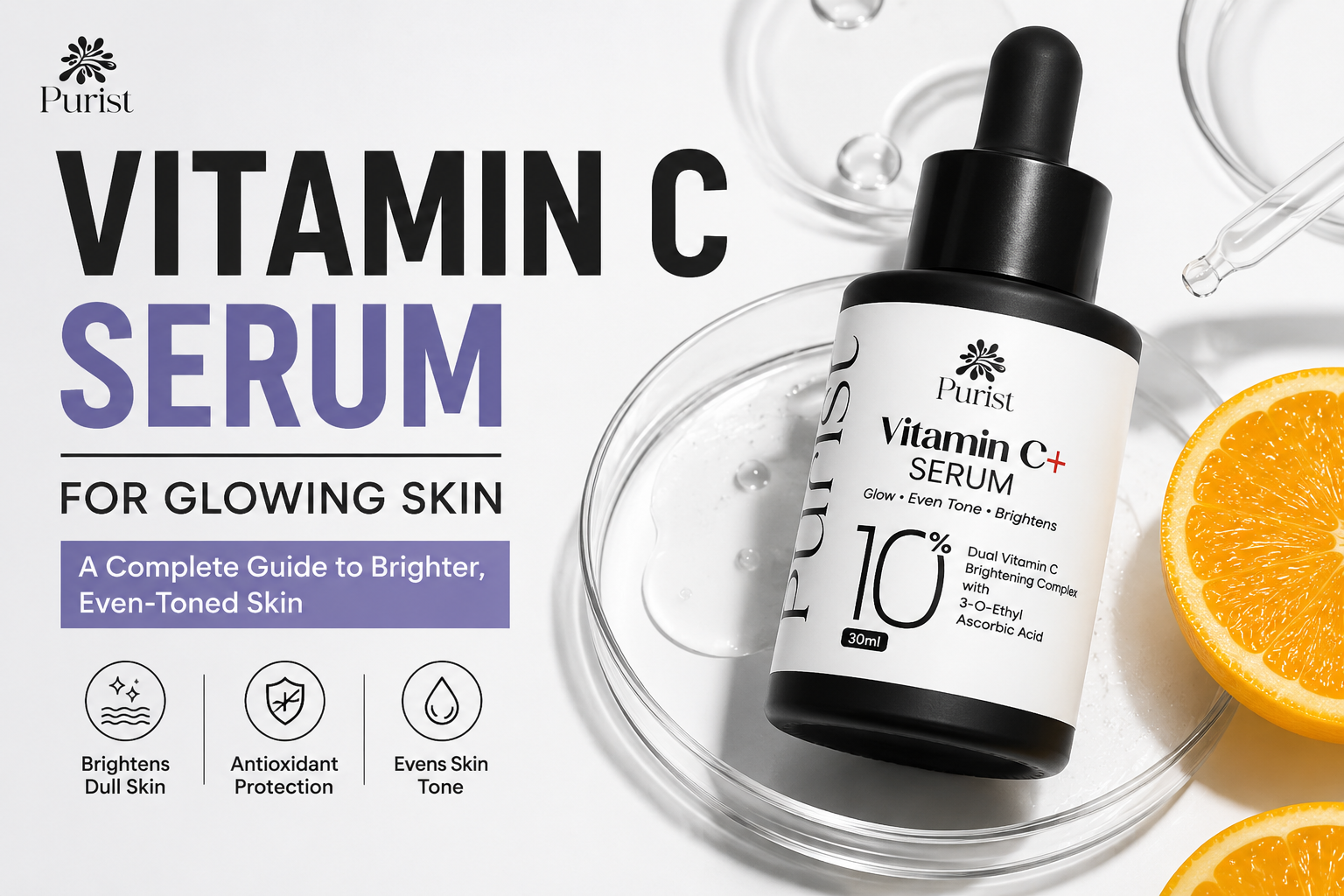
Dull skin rarely happens overnight. Sun exposure, pollution, acne marks, stress, dehydration, and the natural aging process can gradually affect how smooth, bright, and even your complexion looks.
For many people, the biggest skincare challenge is not finding more products. It is finding the right active ingredient that can address multiple concerns without turning a simple skincare routine into a chemistry experiment.
That is where Vitamin C serum comes in.
Vitamin C has become one of the most widely used skincare ingredients for improving skin radiance, supporting an even-looking complexion, and protecting the skin against environmental stressors. When used correctly and consistently, it can become a valuable part of a routine focused on dark spots, dullness, early signs of aging, and uneven skin tone.
This guide explains how Vitamin C serum works, who can benefit from it, how to use it correctly, and what to realistically expect from consistent use.
Why Does Skin Start Looking Dull and Uneven?
Healthy-looking skin naturally reflects light, giving the face a fresh and radiant appearance. However, several everyday factors can interfere with this process.
One of the biggest causes is environmental exposure. UV radiation, air pollution, and oxidative stress can affect the appearance of the skin over time. Acne breakouts can leave behind post-inflammatory marks, while dehydration may make the complexion appear rough and tired.
Uneven skin tone can also develop when melanin production becomes concentrated in certain areas. This may result in dark spots, sun spots, acne marks, or patches of pigmentation.
Common causes of dull and uneven-looking skin include:
-
Sun exposure
-
Acne and post-acne marks
-
Pollution
-
Oxidative stress
-
Dehydration
-
Dead skin cell buildup
-
Natural aging
-
Inconsistent skincare routines
A targeted Vitamin C serum can help support a skincare routine designed to address several of these concerns.
What Is Vitamin C Serum?
Vitamin C serum is a lightweight skincare product formulated to deliver Vitamin C directly to the skin.
Unlike traditional moisturizers, serums are generally designed with concentrated active ingredients and a lighter texture. This allows them to fit easily between cleansing and moisturizing steps.
Vitamin C collection is particularly valued in skincare because of its antioxidant properties. It helps protect the skin from oxidative stress while supporting processes associated with collagen production and a brighter-looking complexion.
Depending on the formulation, a Vitamin C serum may also contain additional ingredients that support hydration, skin barrier function, or antioxidant protection.
The goal is not to dramatically transform your skin overnight. Instead, regular use may gradually support improvements in how the skin looks and feels.
How Vitamin C Supports Healthier-Looking Skin
Vitamin C is involved in several important processes that make it useful in modern skincare routines.
Vitamin C Provides Antioxidant Support
Every day, the skin is exposed to environmental stressors. Sunlight, pollution, and other external factors can contribute to oxidative stress.
Antioxidants help neutralize free radicals generated by these environmental exposures.
Vitamin C is widely recognized as an antioxidant, which is why it is commonly included in skincare products designed for daytime use.
However, Vitamin C serum should not be considered a replacement for sunscreen. Both products serve different purposes and can work together in a complete skincare routine.
Vitamin C Supports Collagen Production
Collagen is an important structural protein associated with skin firmness and elasticity.
As people age, natural collagen production changes. This can contribute to visible signs of aging, including the appearance of fine lines and reduced skin firmness.
Vitamin C plays a role in collagen synthesis, making it a popular ingredient in skincare routines focused on maintaining smoother and healthier-looking skin.
Consistent use may help support the skin's overall appearance as part of a balanced skincare routine.
Vitamin C Helps Improve the Appearance of Uneven Skin Tone
Dark spots and uneven pigmentation are among the most common reasons people add Vitamin C to their skincare routine.
These visible marks may develop due to:
-
Previous acne
-
Sun exposure
-
Skin inflammation
-
Aging
-
Environmental factors
Vitamin C is often used in brightening routines because it can help improve the appearance of uneven skin tone over time.
Patience matters here. Pigmentation does not usually disappear after a few applications. Consistency and proper sun protection are essential.
Key Benefits of Using a Vitamin C Serum
A well-formulated Vitamin C serum can provide several skincare benefits when incorporated into a consistent routine.
Helps Bring Back Skin Radiance
When the skin looks dull, it can make the entire complexion appear tired.
Vitamin C can help support a brighter-looking appearance by addressing factors associated with uneven tone and environmental stress.
Over time, the skin may appear fresher, healthier, and more naturally radiant.
Supports a More Even-Looking Complexion
Uneven tone can make otherwise healthy skin appear less smooth.
Regular use of a Vitamin C serum may help improve the visible appearance of dark areas and uneven pigmentation.
This makes Vitamin C particularly popular among people dealing with:
-
Acne marks
-
Post-inflammatory hyperpigmentation
-
Sun spots
-
Uneven complexion
-
Dull-looking skin
Helps Improve the Appearance of Fine Lines
Fine lines are a natural part of aging, and no skincare product can stop the aging process completely.
However, ingredients that support collagen-related processes and provide antioxidant protection may help improve the overall appearance of the skin.
Vitamin C is commonly included in anti-aging skincare routines because of these properties.
Adds Lightweight Hydration to Your Routine
Many modern Vitamin C serums are formulated with hydrating ingredients that help prevent the skin from feeling dry or uncomfortable.
Hydrated skin often appears smoother and plumper.
This is particularly useful for people who want the benefits of an active skincare ingredient without using heavy creams during the day.
Who Should Consider Using Vitamin C Serum?
Vitamin C is one of the more versatile ingredients in skincare.
It may be suitable for individuals concerned about:
-
Dull-looking skin
-
Uneven skin tone
-
Dark spots
-
Acne marks
-
Early visible signs of aging
-
Loss of skin radiance
-
Environmental exposure
People in their twenties may use Vitamin C as part of a preventative skincare routine, while those with more mature skin may include it to support brightness and overall skin appearance.
However, every person's skin is different.
If you have extremely sensitive skin or are introducing active ingredients for the first time, start slowly and monitor how your skin responds.
How to Use Vitamin C Serum Correctly
Using a good skincare product incorrectly can reduce its benefits.
Fortunately, adding Vitamin C serum to your routine is relatively simple.
Step 1: Cleanse Your Face
Start with clean skin.
Use a gentle cleanser appropriate for your skin type to remove excess oil, dirt, sunscreen, and daily buildup.
Avoid overly harsh cleansers that leave your skin feeling tight or stripped.
Step 2: Apply Your Vitamin C Serum
Apply a small amount of serum to clean, dry skin.
Usually, a few drops are enough for the entire face.
Gently spread the product across your:
-
Forehead
-
Cheeks
-
Chin
-
Neck
Avoid aggressively rubbing the skin.
Step 3: Follow With Moisturizer
After the serum has absorbed, apply a suitable moisturizer.
Moisturizer helps support the skin barrier and maintain hydration.
Even oily skin can benefit from an appropriate lightweight moisturizer.
Step 4: Always Use Sunscreen During the Day
This step is non-negotiable.
If you are trying to improve dark spots and uneven skin tone but skipping sunscreen, you are making your skincare journey much harder.
Daily UV exposure can contribute to pigmentation and visible signs of premature aging.
Apply a broad-spectrum sunscreen during the daytime and reapply when necessary.
Should You Use Vitamin C Serum in the Morning or at Night?
Vitamin C serum can often be used in either a morning or evening routine depending on the formulation and your skin's tolerance.
Many people prefer using it in the morning because of its antioxidant properties.
A simple morning routine could look like this:
-
Gentle cleanser
-
Vitamin C serum
-
Moisturizer
-
Sunscreen
For people new to active skincare ingredients, introducing the serum gradually may be a sensible approach.
You do not need a complicated 10-step routine to see results. A consistent and well-balanced routine is usually more valuable than constantly switching between products.
How Long Does Vitamin C Serum Take to Show Results?
This is one of the most common questions.
The honest answer: skincare takes time.
Some people may notice improved hydration or radiance relatively quickly. However, concerns such as dark spots, uneven skin tone, and visible signs of aging usually require consistent use over several weeks.
Results can depend on factors including:
-
Skin type
-
Skin concern
-
Product formulation
-
Concentration and stability of Vitamin C
-
Consistency of use
-
Sun exposure
-
Overall skincare routine
Taking progress photos every few weeks can sometimes provide a better perspective than checking your skin in the mirror every morning.
Common Mistakes People Make When Using Vitamin C Serum
Even a high-quality serum cannot perform at its best if the rest of the routine works against it.
Here are some common mistakes to avoid.
Using Too Much Product
More serum does not necessarily mean better results.
Applying excessive amounts can waste product and may increase the risk of discomfort for sensitive skin.
Follow the recommended usage instructions.
Skipping Sunscreen
This is probably the biggest mistake.
If your goal is to improve the appearance of pigmentation or dark spots, daily sun protection should be part of the plan.
Think of Vitamin C and sunscreen as teammates rather than competitors.
Expecting Overnight Results
Social media has created unrealistic expectations about skincare.
Real improvements usually happen gradually.
Consistency beats constantly changing products.
Mixing Too Many Active Ingredients at Once
Using multiple strong exfoliants, acids, retinoids, and serums simultaneously can overwhelm the skin.
Introduce new active ingredients carefully rather than launching an entire skincare laboratory on your face every Monday.
Can Different Skin Types Use Vitamin C Serum?
Vitamin C Serum for Oily Skin
People with oily skin often prefer lightweight, fast-absorbing serums.
Look for formulas that do not feel excessively heavy and fit comfortably into a daily routine.
Vitamin C Serum for Dry Skin
Dry skin may benefit from pairing Vitamin C with hydrating ingredients and a nourishing moisturizer.
Maintaining hydration can help the skin feel more comfortable.
Vitamin C Serum for Combination Skin
Combination skin usually requires balance.
A lightweight serum followed by an appropriate moisturizer can help maintain a simple routine without overloading different areas of the face.
Vitamin C Serum for Acne-Prone Skin
Vitamin C may be useful for individuals concerned about the appearance of post-acne marks.
However, active acne, irritation, and sensitivity should be managed carefully.
Always introduce new products gradually.
Vitamin C and Sunscreen: Why They Work Better in the Same Routine
Vitamin C serum and sunscreen have different roles.
Vitamin C provides antioxidant support against environmental stressors, while sunscreen helps protect the skin against harmful UV exposure.
Using both can support a skincare routine focused on:
-
Preventing the appearance of new dark spots
-
Maintaining a more even-looking complexion
-
Supporting long-term skin health
-
Reducing environmental stress on the skin
For anyone serious about achieving brighter-looking skin, sunscreen should remain a daily habit.
There is no glamorous shortcut around it.
Building a Simple Brightening Skincare Routine
A complicated skincare routine is not always a better skincare routine.
For many people, the following structure is enough:
Morning
-
Gentle cleanser
-
Vitamin C serum
-
Moisturizer
-
Broad-spectrum sunscreen
Evening
-
Gentle cleanser
-
Targeted treatment if required
-
Moisturizer
The best routine is one you can actually maintain consistently.
Buying twelve products and using them for four days is not a skincare strategy.
Frequently Asked Questions About Vitamin C Serum
Can I use Vitamin C serum every day?
This depends on the product formulation and your skin's tolerance. Many people use Vitamin C regularly, but those with sensitive skin may prefer introducing it gradually.
Can Vitamin C serum help with dark spots?
Vitamin C is commonly used in skincare routines focused on improving the appearance of dark spots and uneven skin tone. Consistency and daily sun protection are important for managing pigmentation.
Should I apply Vitamin C before moisturizer?
Generally, lightweight serums are applied before moisturizer so the active ingredients can be applied directly to clean skin.
Can Vitamin C serum be used under makeup?
Yes, many lightweight serums absorb before moisturizer and sunscreen, making them suitable for morning skincare routines before makeup application.
Do I need sunscreen when using Vitamin C?
Yes. Sunscreen remains important regardless of whether you use Vitamin C. It helps protect the skin from UV exposure that can contribute to pigmentation and premature skin aging.
The Bottom Line: Consistency Creates Better Skin Habits
Bright, healthy-looking skin is rarely the result of one miracle product.
It comes from a combination of consistent skincare, appropriate active ingredients, hydration, sun protection, and patience.
Vitamin C serum has earned its place in modern skincare because it addresses several concerns at once. It can support a brighter-looking complexion, help improve the appearance of uneven skin tone, provide antioxidant benefits, and contribute to a routine focused on maintaining youthful-looking skin.
The key is to keep your routine simple and consistent.
Cleanse your skin properly. Use targeted products with purpose. Moisturize according to your skin's needs. And most importantly, protect your skin from the sun.
When used as part of a well-balanced routine, Vitamin C can become a valuable long-term skincare ingredient for anyone working toward smoother, brighter, and more even-looking skin.

 English
 Arabic
 Spanish
 Portuguese
 Deutsch
 Turkish
 Dutch
Dutch
 Italiano
 Russian
 Romaian
 Portuguese (Brazil)
 Greek
Greek