Building dependable software requires teams to follow effective quality practices throughout the development process. These practices help prevent mistakes, identify defects, and ensure that applications satisfy business requirements. Quality Assurance (QA), Quality Control (QC), and software testing are important parts of software quality management, but they serve different purposes. QA improves the processes used to develop software, QC evaluates the quality of the product, and testing verifies application behavior under specific conditions. Understanding these differences can help aspiring professionals develop a stronger foundation in software development. Learners can explore these fundamentals through Software Testing Training in Chennai and gain an introduction to industry-relevant testing practices.
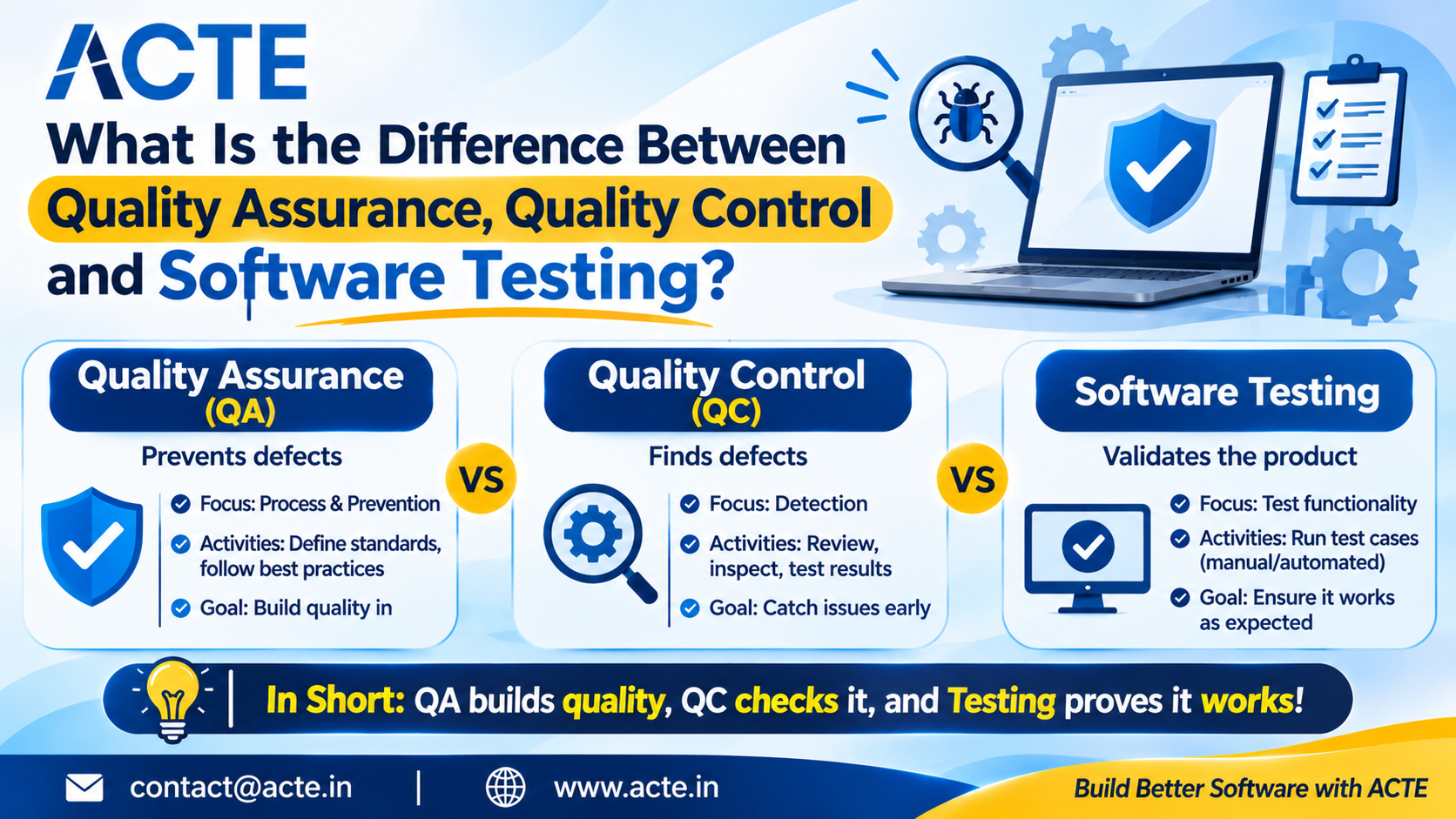
Understanding Quality Assurance in the Development Process
Quality Assurance is concerned with improving the methods and procedures used to create software. Its primary goal is to prevent defects by establishing consistent standards and encouraging teams to follow effective development practices. QA activities may include requirement reviews, process audits, documentation assessments, and the implementation of quality guidelines. For example, a team may introduce regular code reviews and standardized development procedures to reduce recurring errors. By addressing weaknesses in the development process, Quality Assurance supports continuous improvement and helps organizations produce software that meets expected quality standards.
How Quality Control Evaluates Software Quality
Quality Control focuses on determining whether a software product meets its defined requirements. It involves examining the application or its components to identify errors, inconsistencies, and missing functionality. Activities may include inspections, requirement verification, and the evaluation of product results. Consider an online shopping platform where customers expect accurate prices, reliable payment processing, and correct order information. Quality Control helps verify that these features satisfy the specified requirements. When problems are identified, the development team can make corrections before the software is released, improving product reliability and customer confidence.
The Role of Software Testing in Defect Detection
Software testing involves evaluating an application to discover defects and determine whether its features work as expected. Testers prepare test cases, execute them under different conditions, compare actual outcomes with expected results, and document any issues. Common testing types include functional testing, integration testing, regression testing, performance testing, and security testing. For instance, a tester may verify whether a login page accepts valid credentials, rejects incorrect passwords, and displays appropriate error messages. Both manual and automated methods can support these activities. Software Testing Training in Bangalore can help learners understand testing fundamentals and practice evaluating software applications.
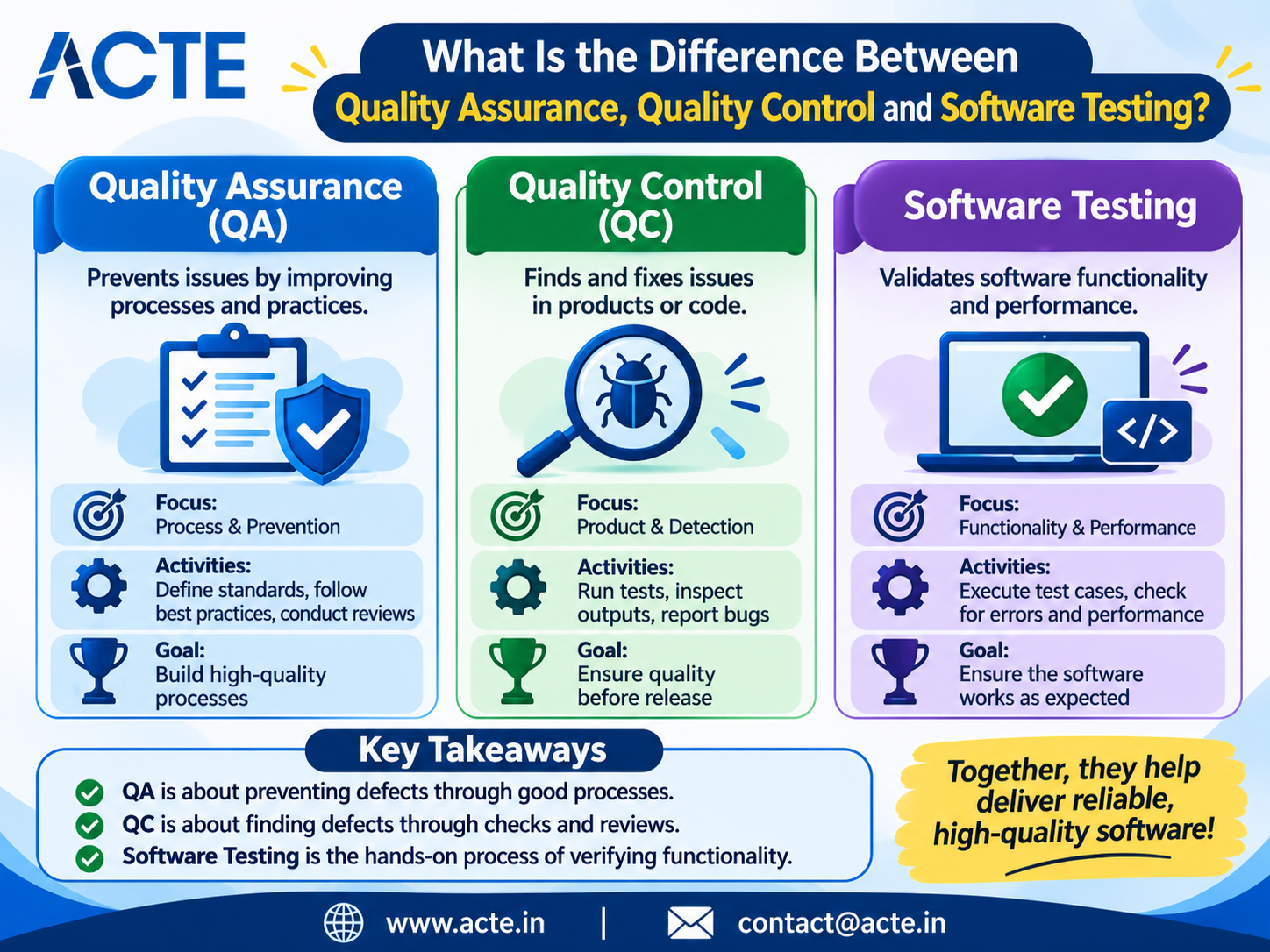
Comparing the Objectives of QA, QC, and Testing
Although QA, QC, and software testing contribute to the same overall goal, their responsibilities differ. QA is process-focused and aims to prevent defects by improving development practices. QC is product-focused and checks whether software meets the required standards. Software testing examines application behavior and helps identify failures or unexpected results. For example, QA may establish guidelines for testing, testers may execute cases based on the application requirements, and QC activities may help assess whether the product satisfies its acceptance criteria. Understanding these distinctions allows organizations to assign responsibilities appropriately and manage quality more effectively.
Integrating Quality Activities Into Software Development
Quality practices should be incorporated throughout the Software Development Life Cycle rather than treated as a final checkpoint. During planning, QA helps establish procedures and quality objectives. During design and implementation, reviews can identify inconsistencies before they become more difficult to resolve. Testing then evaluates developed features, while QC activities help determine whether the software meets acceptance requirements. If defects are found, developers correct them and testers verify the changes. Regression testing may be used to ensure that existing functionality remains unaffected. Through Software Testing Training in Hyderabad, learners can explore how these activities work together in practical software projects.
Essential Skills for Software Quality Professionals
A successful career in software quality requires attention to detail, analytical thinking, logical reasoning, and effective communication. Professionals should understand requirement analysis, test planning, test case creation, defect tracking, and test documentation. Knowledge of SQL, API testing, automation tools, and programming basics can provide additional advantages. Depending on their interests and experience, individuals may pursue roles such as software tester, QA analyst, test engineer, automation tester, or QA lead. Practical project experience helps candidates learn how to identify issues, report defects clearly, and collaborate with developers to improve application quality.
Developing Practical Testing Skills for Industry Requirements
Hands-on experience helps learners understand how software quality concepts are applied in professional environments. They can practice analyzing requirements, preparing test scenarios, executing test cases, reporting defects, and verifying fixes. As their knowledge develops, they can explore automation frameworks, API validation, and regression testing. These exercises improve problem-solving abilities and provide a clearer understanding of common testing workflows. The Software Testing Training Course is a learning option for individuals who want to strengthen their software testing knowledge and prepare for quality-related responsibilities.
Conclusion:
Quality Assurance, Quality Control, and software testing are different but complementary components of software quality management. QA focuses on improving processes and preventing defects, QC checks whether the product satisfies established requirements, and testing evaluates application behavior to uncover issues. When organizations coordinate these activities throughout development, they can reduce errors, improve reliability, and deliver software that meets user expectations. Understanding how these disciplines differ provides a useful foundation for professionals who want to build careers in software testing and quality assurance.

 English
 Arabic
 French
 Spanish
 Portuguese
 Deutsch
 Turkish
 Dutch
 Russian
 Romaian
 Portuguese (Brazil)
 Greek