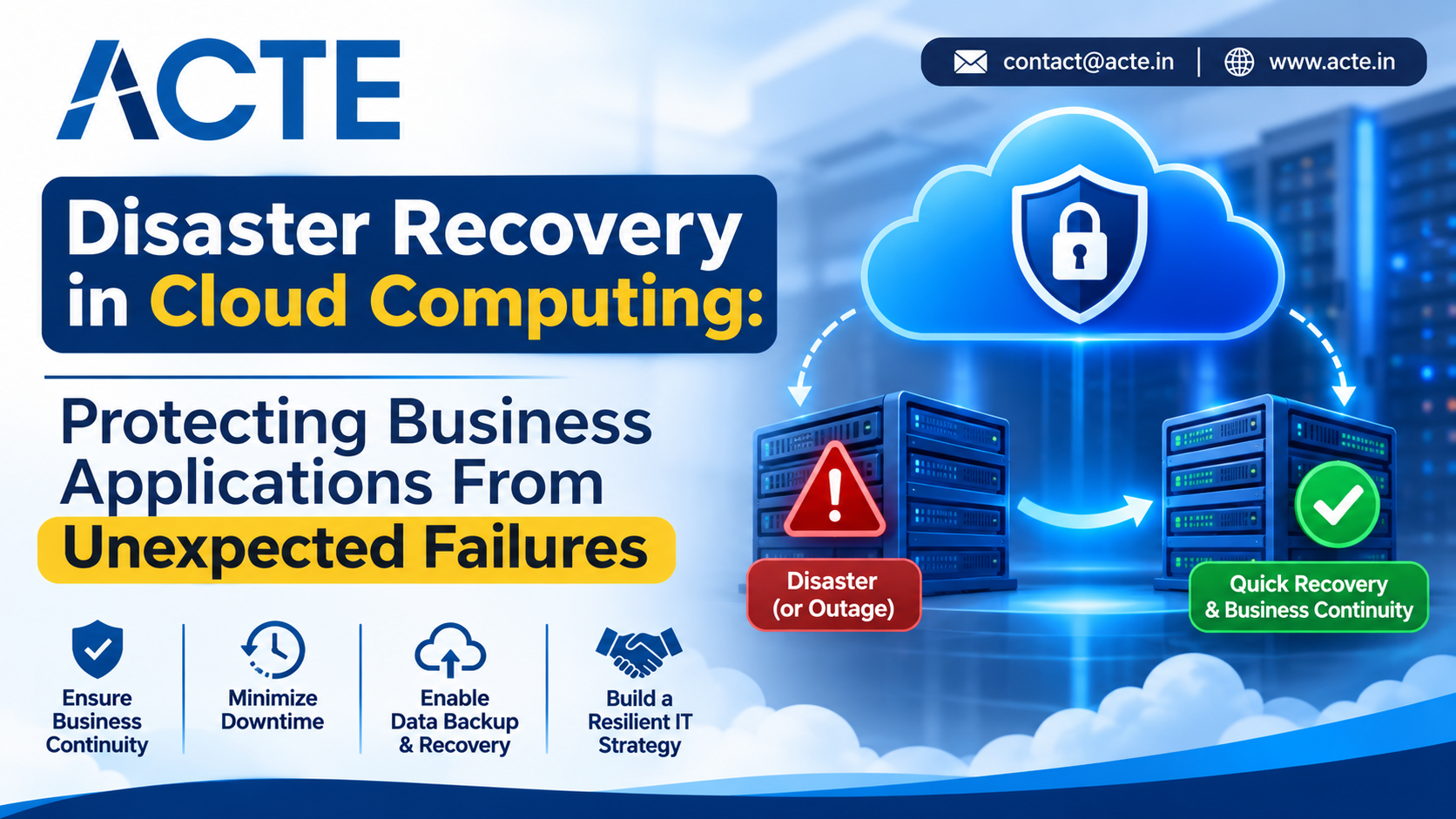
Organizations depend on cloud-based applications to manage information, support customers, and maintain essential business processes. Although cloud infrastructure offers flexibility and scalability, unexpected incidents such as server failures, cyberattacks, software malfunctions, and network disruptions can affect application availability. If these problems are not addressed quickly, businesses may experience operational delays, lost revenue, and reduced customer satisfaction. Cloud disaster recovery helps organizations prepare for such situations by protecting critical information and establishing procedures for restoring affected services. A well-organized recovery strategy enables technical teams to respond efficiently and limit the consequences of system failures. Those interested in learning about cloud technologies can explore a Cloud Computing Course in Chennai to develop foundational knowledge of cloud infrastructure and management.
Understanding the Purpose of Cloud Disaster Recovery
Cloud disaster recovery involves restoring applications, databases, and computing resources after a disruption affects normal business operations. It combines data protection, recovery infrastructure, and documented response procedures to help organizations resume essential services. Depending on business needs, recovery may involve restoring information from backups, switching workloads to another environment, or activating previously prepared resources.
Effective recovery planning requires an understanding of how different application components interact. A business application may depend on databases, storage services, authentication systems, and network connections. If any essential component remains unavailable, restoring the main application may not be sufficient. Organizations should identify these dependencies, assign responsibilities, and establish a clear restoration sequence. This preparation helps technical teams work systematically when unexpected incidents occur.
Identifying Risks That Can Interrupt Cloud Operations
Cloud environments can experience disruptions caused by infrastructure failures, software defects, incorrect configurations, accidental data deletion, security breaches, and network connectivity problems. Failures affecting a particular cloud region may also interrupt services that depend on resources hosted there. External applications and third-party integrations can introduce additional points of failure.
Organizations should evaluate potential risks according to their likelihood and business impact. For example, an online payment platform may require stronger availability protections than an internal application used for occasional reporting. Risk assessments help businesses identify critical workloads, examine existing weaknesses, and determine where additional safeguards are necessary. A Cloud Computing Course in Bangalore can help learners develop an understanding of cloud architecture, infrastructure components, and the principles used to improve service reliability.
Using Backups and Replication to Safeguard Business Data
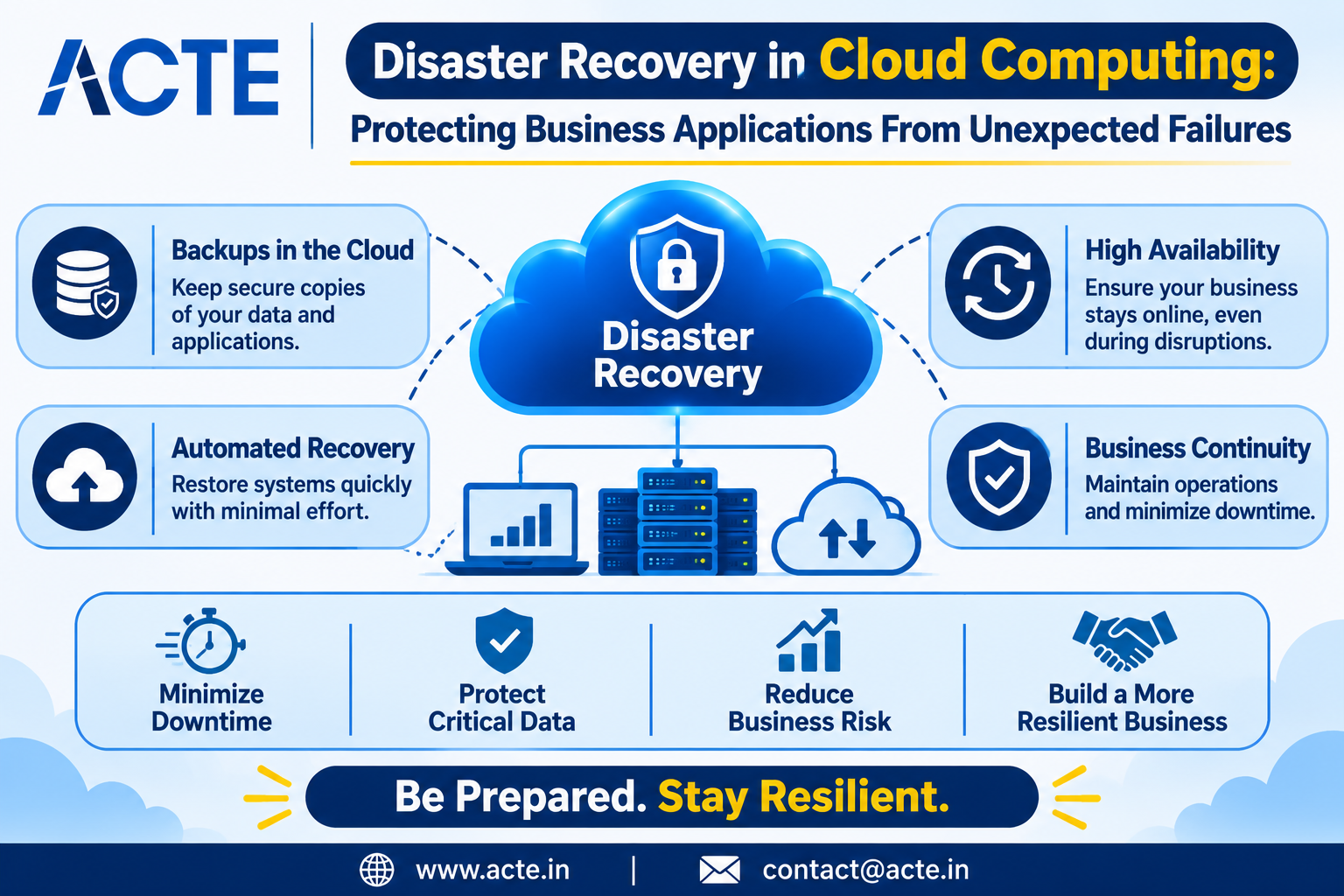
Reliable data protection allows organizations to recover important information after unexpected incidents. Backups create separate copies of databases, files, application configurations, and other business records. If information becomes corrupted, deleted, or inaccessible, these copies can be used to restore an appropriate version. Organizations should establish backup schedules and retention policies according to data importance, business requirements, and compliance obligations.
Replication supports recovery by maintaining copies of data or workloads in another environment. Depending on the configuration, updates may be copied continuously or at scheduled intervals. Replicating resources across different regions can reduce the impact of location-specific failures. However, replication alone is not sufficient because unwanted changes and corrupted data may also be copied. Combining independent backups, replication, access restrictions, encryption, and routine restoration tests provides a more dependable protection strategy.
Defining Recovery Time and Recovery Point Objectives
Clear recovery targets help organizations determine the level of protection required for different applications. Recovery Time Objective (RTO) represents the maximum acceptable period for restoring a service after a disruption. Recovery Point Objective (RPO) identifies the maximum amount of data loss an organization can tolerate, expressed as a period of time.
These objectives influence decisions about backup frequency, replication technology, recovery infrastructure, and automation. A business application processing customer transactions may require a short RTO and minimal data loss. A less critical reporting system may tolerate a longer interruption. Organizations should establish suitable targets by considering operational priorities, financial risks, customer expectations, and regulatory requirements. Regular reviews ensure that these targets remain appropriate as applications and business needs evolve.
Choosing an Appropriate Cloud Recovery Model
Different cloud recovery models provide different levels of readiness and require different levels of investment. Backup-and-restore approaches use protected data and configuration files to rebuild systems after a failure. Pilot-light models maintain essential resources that can be expanded during recovery. Warm standby environments keep a reduced version of the application operational, while active-active designs distribute workloads across multiple environments to improve availability.
Choosing the right model requires an assessment of application criticality, recovery targets, infrastructure costs, and technical complexity. Organizations should also consider database consistency, network routing, security settings, software licensing, and the availability of services in alternative regions. The selected architecture should meet business requirements without introducing unnecessary operational overhead. Professionals can explore a Cloud Computing Course in Hyderabad to learn more about cloud deployment approaches and infrastructure design.
Securing Recovery Environments and Monitoring System Health
Recovery infrastructure must be protected against unauthorized access and malicious activity. Attackers who compromise administrative accounts may attempt to damage production systems and backup resources at the same time. Organizations can reduce this risk through multifactor authentication, least-privilege permissions, encryption, and separate controls for backup administration. Immutable storage and isolated backup environments provide additional protection against ransomware and unauthorized deletion.
Monitoring tools help organizations detect problems involving application performance, infrastructure health, network connectivity, and unusual system activity. Alerts can notify responsible teams when critical services become unavailable or show signs of failure. Clear incident procedures should explain who is responsible for responding, how issues are escalated, and which systems need to be restored first. Combining security measures with effective monitoring improves visibility and supports a more coordinated recovery process.
Testing Recovery Plans and Improving Operational Readiness
A disaster recovery strategy should be tested regularly to confirm that its procedures work as expected. Organizations can conduct backup restoration exercises, database recovery tests, application failover simulations, and recovery drills involving alternative cloud environments. These activities help determine whether systems can be restored successfully within the established recovery targets.
Testing may reveal incomplete backups, missing permissions, outdated documentation, or dependencies that were overlooked during planning. Technical teams should document their findings, correct identified weaknesses, and repeat tests after major system changes. Automation can also improve consistency by using scripts, reusable infrastructure templates, and standardized deployment procedures. Learners who want to expand their cloud technology knowledge can explore a Cloud Computing Certification Course to strengthen their understanding of infrastructure management and cloud operations.
Conclusion:
Cloud disaster recovery provides businesses with a structured way to protect applications and recover essential services during unexpected disruptions. Combining independent backups, replication, measurable recovery targets, secure infrastructure, and continuous monitoring helps reduce the impact of failures. Regular testing verifies that recovery procedures remain effective and that technical teams can respond confidently when incidents occur. By maintaining and improving their disaster recovery plans, organizations can protect valuable information, reduce downtime, and support more reliable business operations.

 Arabic
 French
 Spanish
 Portuguese
 Deutsch
 Turkish
 Dutch
 Italiano
 Russian
 Romaian
 Portuguese (Brazil)
 Greek